Get Started

Kidney Transplant Cost in India

15000 $

13750 $

12500 $

Maximum

Average

Minimum

Book your appointment

Affordable and Effective Kidney Transplant in India

End-stage renal disease and chronic kidney disease are two of the most prominent issues affecting a large population in the world. These are also the conditions when the person is put on dialysis because their kidney stops functioning as usual.


Also in cases of advanced diabetes, genetic diseases or high blood pressure, there can be the requirement for dialysis. Dialysis acts as the artificial kidney that works as a life-sustaining treatment and not a cure.


Kidney transplant is the cure for chronic kidney issues and the best alternative to dialysis. India offers high success rate kidney transplant, with patients from around the world enjoying an affordable way out of dialysis and kidney-related issues. 


Read on till the end to know all about the kidney transplant cost in India.

Kidney Transplant in India
Types and Cost Comparison of Kidney Transplant in India

What is a Kidney Transplant?

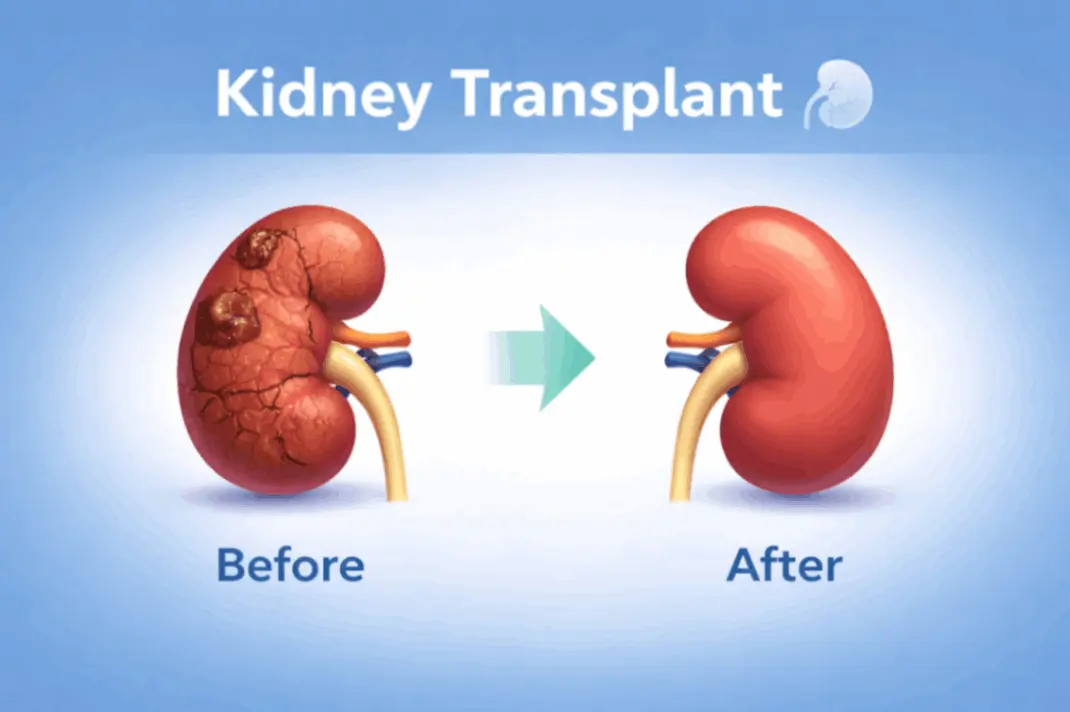
A kidney transplant involves replacing damaged kidney with a healthy one to reverse the ill effects of kidney-related issues like CKD or end-stage renal disease among others. A great alternative to dialysis, kidney transplants can be of two types - deceased donor and living donor. The latter is more prevalent and successful, providing the recipient (the person receiving the kidney) an extended lifespan of 15-20 years. 


Deceased donor kidney transplant provides 10-15 years of extended lifespan. The kidney usually comes from a donor over 60/50-59 years with a specific health condition or when the donor's heart stopped before organ recovery.


Kidney transplant is the preferred treatment for Stages 4/5 CKD, end-stage renal disease or kidney failure when dialysis is required and when the patient wishes to avoid dialysis entirely - in this case it is known as preemptive transplant. Kidney transplant is also required when other treatments are not suitable. 

Eligibility Criteria for Kidney Transplant in India

To be eligible for a kidney transplant in India, you must meet the following criteria, no matter if you are an international or Indian patient:

  • Medical condition: Patient must have end-stage renal disease or chronic kidney disease (Stage 4/5) with Glomerular Filtration Rate less than 15 mL/min (< 15 mL/min.)
  • Fitness: Candidates must be in the right physical fitness to undergo this major surgery and immunosuppression. This requires meeting the satisfactory results for blood tests, heart, liver and cancer screening. 
  • Donor's age must be between 18-65 years old and they must be a near relative (living donor) and in case of unrelated donor they must be authorized by the Authorization Committee (AC) proving no financial transaction exists.
  • Compatibility: Blood group and HLA matching must show high compatibility for the best results. 
  • Donor source & Clearance: Foreigners must bring their own living donor and a No Objection Certificate from the home country Embassy. They must also have legal clearance, verifying the donor-recipient relation.
  • Proof of relationship (birth certificates, official IDs, photos) is essential.
  • THOTA: Transplant must meet legal framework in India that prohibits organ trading. Every living donor transplant must have the authorization from the Authorization Committee.

Current Scenario of Kidney Transplant in India

A well-established procedure in India, kidney transplant has significantly grown in this branch of medical science with well-equipped and advanced hospitals that support the transplantation requirements of international and Indian patients. Here's what has made India the most reliable destination for kidney transplants:

  • Advanced kidney transplant techniques: Indian hospitals and transplant surgeons have adopted advanced techniques of kidney transplant like robot-assisted (RAKT), laparoscopic nephrectomy and rigorous pre-transplant evaluation which helps set the correct expectations for the patients.
  • Surgical expertise: With success rates between 80%-90%, Indian surgeons have achieved surgical expertise that is at par (and above in some cases) with international surgical expertise. Hospitals like Fortis have surgeons with experience in ABO-incompatible kidney transplant - believed to be one of the high-risk transplant types.
  • Better immunosuppressive drugs and induction agents: With rapid adoption of advancements and growth in pharmaceutical industry, India has been able to boost kidney transplant success rates with the help of better immunosuppression and induction. High risk cases find Rabbit anti-thymocyte globulin (rATG) for induction, while low risk, living donor transplant cases see the use of Basiliximab and in some cases belatacept. Kidney transplant immunosuppression is with the gold standard triple regimen of Tacrolimus, Mycophenolate Mofetil (MMF/MPA), and Prednisolone. 
  • Organ availability & regulations: Since 2011 under the Indian Law and Amendments, intensive care doctors are required to request organ donation in the event of brain death and registering it nationally so that the organ availability gap can be filled and made available for waitlisted patients.
  • Active counseling for organ donation: Relatives of patients coming in for kidney transplant or of patients declared brain dead - are actively counseled by the medical team to consider organ donation, which improves awareness and helps reduce family hesitation.

What is the Cost of Kidney Transplant in India?

kidney transplant in India is effective and affordable


The average kidney transplant cost in India can be around INR 4,00,000 to 12,00,000 INR ($8000 to $16,000.)


Here’s a look at the different cost estimates for the procedure, depending on the type and the city in India. We’ll also look at the global cost comparisons.

Cost Depending on the Transplant Type

There are mainly two types of kidney transplants; here’s a look at them with their respective costs:

  • Living Donor Kidney Transplant: A healthy person donates one of their kidneys. Usually, a family member or someone related by blood is preferred.

    Living donor kidney transplant costs INR 11,47,000 to 12,35,000+ (approx. $12,500 to $13,500 at hospitals like BLK-Max in Delhi).
  • Deceased Donor Kidney Transplant: A deceased person’s kidney acts as the donor organ here. However, this is a challenging type, as there is a shortage of donor kidneys, which leads to long waiting lists.

    This deceased donor kidney transplant costs around INR 5,00,000 to 13,00,000 (approx. $5800 to $15,000).

Cost Depending on Surgery Type

This is the cost consideration depending on the different surgical approaches that may be chosen depending on the patient’s health.

  1. Open Surgery - This is the traditional surgical approach that is taken for this treatment and is quite common. This approach leads to longer recovery time, increasing the chances of an infection.

    The open surgery costs around ₹4,00,000 to ₹10,00,000 ($8,000+) for international patients.

  2. Laparoscopic Surgery - This is also known as "keyhole surgery" and is minimally invasive as it uses small incisions. This provides less pain, has quicker recovery, and leaves smaller scars.

    The cost of laparoscopic kidney transplant is around ₹11,00,000 to ₹13,00,000, ($14,000+) depending on the factors we’ll shortly discuss.

  3. ABO Incompatible Transplants - ABO-incompatible kidney transplants involve recipients and donors with different blood types. It may seem risky, but medical advancements have made it a success. With techniques such as desensitization, successful transplants have been made possible.

    However, there are risks of infection. Due to the high risk of rejection and infection, the ABO incompatible kidney transplant costs $22,000 or more, which is around ₹18,80,000.

City-wise Cost of Kidney Transplant in India

The best kidney transplant hospital in India is usually located in metropolitan cities. The cost of the procedure usually ranges differently across India as listed below:


Cities

Cost in INR

Cost in USD

Delhi

₹11,47,600 – ₹12,35,000

$12,500 – $13,400

Chennai

₹6,08,200 – ₹15,76,000

$7,300 – $18,900

Ahmedabad

₹5,64,700 – ₹14,10,900

$6,800 – $16,900

Bangalore

₹6,64,100 – ₹16,58,000

$8,000 – $20,000

Mumbai

₹7,01,300 – ₹19,91,100

$8,500 – $24,200

Pune

₹6,39,200 – ₹16,51,600

$7,800 – $20,100

Hyderabad

₹5,89,600 – ₹16,51,600

$7,100 – $20,100

Kolkata

₹5,39,900 – ₹14,56,200

$6,500 – $17,900


Please note that the above kidney transplant cost is an estimate of the procedure. The final cost may vary depending on several factors discussed below.


Yapita Health provides the most affordable kidney transplant in India, with its services available across India. You can request a quote for kidney transplant costs in Delhi, Mumbai, Bengaluru, and any other city.


Kidney Transplant In India: Complete Cost Breakdown

Cost Component

Cost in INR

Cost in USD

Pre-transplant tests

₹30,000 – ₹1,00,000

$350 – $1,200

Transplant surgery

₹4,00,000 – ₹15,00,000

$4,500 – $16,500

Hospital stay & recovery

₹1,00,000 – ₹3,00,000

$1,200 – $3,300

Post‑operative care & medications

₹10,000 – ₹30,000 per month

$150 – $350 per month

Regular follow‑ups (annual)

₹50,000 – ₹1,00,000 per year

$550 – $1,200 per year

Total

₹6,30,000 – ₹22,00,000

$7,150 – $24,400


The total cost of kidney transplants are influenced by the following components:

  • Pre-transplant tests: This can cost between ₹30,000 and ₹1,00,000 ($350-$1,200). These tests are important to ensure the donor and recipient are a match.

  • Transplant surgery: This ranges from ₹4 lakhs to ₹15 lakhs ($4,500-16,500), This covers the operation theatre cost, procedure, anesthesia and the surgeon’s fees.

  • Hospital stay and recovery: Costs for the hospitalization for both the recipient and donor adds between ₹1 lakh and ₹3 lakhs ($1,200-$3,300).

  • Post-operative care and medications: This includes organ rejection (anti-rejection), immunosuppressant drugs. These cost between ₹10,000 to ₹30,000/month ($150-$350) or around ₹50,000 to ₹2,00,000 ($550-$2,200) annually.

  • Regular follow-ups: The annual tests and checkups can cost additional ₹50,000 to ₹1,00,000. ($550-$1,200).

Cost of Diagnostic Tests For Kidney Transplant In India

The total cost of diagnostic tests for kidney transplant is ₹1,11,950 - ₹2,77,100 (excluding package discounts.) Here's the complete breakdown of the different diagnostic tests that add to the overall cost of kidney transplant:


A. Tests to Determine Donor & Recipient Compatibility


Diagnostic Test Cost (INR)
Crossmatch test + full work‑up investigations (including HLA typing) 1,00,000 - 2,00,000
HLA & lymphocytic crossmatch 35,000 - 50,000

B. Kidney & Liver Exams


Diagnostic Test Cost (INR)
Metabolic Panel Blood Test 1,500 - 2,000
Liver Function Test (LFT) 300 - 1,000
Lipid Profile 1,000 - 2,500

C.  Immune System Exams


Diagnostic Test Cost (INR)
Blood Typing Test 300 - 600
CBC Blood Test 200 - 300
Coagulation Test 300 - 900
Antigen–antibody Test 250 - 500
HIV Test 500 - 1,000

D.  Lung Tests


Diagnostic Test Cost (INR)
Chest X‑ray 500 - 2,000
Pulmonary Function Test (PFT) 800 - 1,500

E. Heart Tests


Diagnostic Test Cost (INR)
ECG 300 - 700
Cardiac Stress Test 3,000 - 5,000

F. Blood Flow Tests


Diagnostic Test Cost (INR)
Doppler Ultrasound 1,000 - 2,000
Pelvic CT Scan 2,000 - 8,000

Factors affecting the cost of Kidney Transplants in India

  1. Pre-Transplant Lab Test Costs: Different medical examinations such as chest x-rays, blood tests, echocardiograms, and electrocardiograms, among others. These tests allow the surgeon and their team to assess your overall condition before the surgery and determine your ability to undergo it.

  2. Surgery/Transplant Cost: The procedure contributes majorly to the cost, with other hospital costs such as pre-transplant tests, the surgical process, and other procedures adding to it.

  3. Immunosuppressant Injection Costs: Immunosuppressants may be necessary in some cases to prevent organ rejection (for example, in the case of ABO incompatible transplants.)

  4. Doctor’s and Medical Team Fees: Renal transplant surgeons and their medical teams include experts from different departments. Their individual fees, along with the surgeon’s, can add to the overall cost.

  5. Duration of Stay and Recovery - If your recovery time is more than your stay mentioned in the package, it can increase the overall costs.

  6. Medications - The medicines that doctors prescribe can cost more than the estimate due to various factors such as availability. Especially the medications in the post-transplant stage end up increasing the cost.

Day-by-day Process of Kidney Transplant in India

Before Transplant (Preparation Phase)

  • Discuss treatment options (continued dialysis vs. transplant) with your nephrologist.

  • Identify a potential living donor in the family (if applicable) and check blood groups.

  • Donor undergoes compatibility testing: blood group, HLA typing, cross‑match, kidney function tests, imaging.
  • Psychological and social evaluation for both donor and recipient 
  • Complete legal and regulatory paperwork as per Indian laws (relationship proof, authorisation committee approval for unrelated donors, consent forms).
  • Arrange finances, insurance pre‑approvals (if applicable) and plan for caregiver support and time off work.

In India - Surgery Process (Typical Living‑Donor Surgery)

  • Arrive in India and check into accommodation near the hospital (for international or out‑of‑city patients).

  • Donor and recipient both undergo updated blood tests, imaging, and cross‑match to reconfirm suitability.

  • Both recipient and donor are admitted to the transplant hospital for pre-surgery tests and medication as advised.

  • Surgery lasts for 3-5 hours where the donor and recipient surgeries are performed (laparoscopic or open) and the patient is moved to ICU or recovery room.
  • Day 4-7: stabilisation, education, donor discharge, then recipient discharge when stable.

Immediate post‑op

  • Recipient is monitored for blood pressure, urine output, oxygen levels and electrolytes. New kidney starts producing urine after blood flow is restored; it may take days in case of delayed graft function.
  • Pain control, IV fluids, antibiotics and immunosuppressants started/continued as per doctor's advise.
  • The donor is observed and kept on pain control. Later shifted to ward once early mobilization begins.
  • Both recipient and donor stay in hospital for 5-7 days for monitoring and recovery.

After Transplant (Recovery)

  • Week 1-4: Recipient maintains follow-up, immunosuppressants and doctor's advise on diet, and activity.
  • Months 2-3: Once recipient is stable, follow-up frequency reduces and they can resume social life around 6-8 weeks depending on doctor's advice.
  • Months 3-12: Monthly follow-up and routine blood tests to check kidney function, immunosuppressant drug levels, lipid, blood sugar and complete blood counts.
  • Beyond 1 year: Nephrology visist every 3-6 months, annual comprehensive evaluations, lifelong immunosuppressants at lowest effective dose. Donor maintains annual check-up of blood pressure, kidney function and healthy lifestyle. 
Why choose Yapita Health
Doctors
+5000 Doctors
Packages
+20000 Packages
Patient
+5000 Served Patient
RoboticTreatment
Robotic Treatment
InvasiveSurgery
Minimal Invasive Surgery
Countries
+4 countries

Why Should a Foreigner Choose India for Their Kidney Transplant Surgery?

As an international citizen, you may have already heard of or faced issues with getting appointments for sophisticated treatment such as a kidney transplant. These are mainly due to the long wait times (as much as 2 years!) and the treatment cost in your country.


As you’ll shortly see (table below), India is a one-stop solution that helps you overcome both of those barriers. India is quickly becoming a renowned destination for treatment and surgeries at world-class facilities.


These are fully equipped with modern technology and a skilled team, including renal transplant surgeons with high success rates. Foreign healthcare travelers can expect the cost of kidney transplant to be around $450,000 in countries such as the US.


For foreign healthcare travelers, the cost of a kidney transplant in India is around $8000, whereas the cost in other countries like the USA is approximately 100,000 USD and around 57,900 GBP in the UK.


Consequently, kidney transplants in India can cost significantly less than in any other country!


Below is a comparative look at the different kidney transplant costs between India and different countries:

Countries

Cost Range In USD

India

$5800 to $17,500

USA

$23,000 to $440,000

Germany

$69,971 to $102,357

United Kingdom

$57,900 to $100,000

Singapore

$50,000 to $110,000

Turkey

$18,000 to $25,000

Thailand

$50,000 to $60,000


Best Kidney Transplant Hospital in India

  1. BLK Max Super Specialty Hospital, New Delhi

  2. Artemis Hospital, Gurgaon

  3. Fortis Memorial Research Institute, Gurgaon

  4. Medanta – The Medicity, Gurgaon

  5. Global Hospitals, Chennai

  6. Indraprastha Apollo Hospital, New Delhi

  7. Max Super Speciality Hospital, Saket, New Delhi

  8. Nanavati Max Super Speciality Hospital, Mumbai

  9. Shalby Sanar International Hospital, Gurgaon

  10. Apollo Gleneagles Hospital, Kolkata

Best Kidney Transplant Package in India

Yapita Health can get you the best kidney transplant package across India, helping you get the right treatment by the best experts in the country.


From Delhi NCR to Mumbai, our experienced patient coordinators can help you get the best package inclusive of medical visa assistance, travel and accommodation among others!

Say Hello to Better Kidney Function

As India is quickly becoming a top name in kidney transplants, you can get high-skilled renal surgeons using the latest medical techniques for this procedure. As your reliable kidney transplant company, we bring you cost-friendly packages for kidney transplants in India.


The all-in-one affordable packages for kidney transplants in India from our partners include the cost of treatment and accommodation with no hidden costs!


Connect with us using the form at the top of the page, and our health consultants can guide you towards a healthy life!

Related Pages of Kidney Transplant
FAQs Related to Kidney Transplant

What Factors Affect the Cost of Kidney Transplant in India?

Factors that affect the cost of kidney transplant in India include the type of transplant, hospital facilities, surgeon's fees, and post-operative care.

What Are the Pre-Transplant Tests Required for a Kidney Transplant in India?

Pre-transplant tests for a kidney transplant in India may include blood tests, cross-matching, imaging studies, heart evaluation, and psychological assessments.

What Is the Success Rate of Kidney Transplant in India?

The success rate of kidney transplant in India is quite high, with a success rate ranging from 90-95% in the first year and 85% survival rate over a span of 5 years.

Can Patients Get an Insurance Plan for Kidney Transplant in India?

Some insurance companies in India may offer coverage for kidney transplant procedures. Patients are advised to check with their insurance provider for specific coverage and limitations.

What Is the Recovery Time After Kidney Transplant?

The recovery time after a kidney transplant varies for each patient, but it typically requires a hospital stay of around 10-15 days. Full recovery and adjustment to the new kidney can take several months.

How Long Does a Kidney Transplant Take?

The actual transplantation surgery for a kidney transplant usually takes about 3-4 hours. However, the entire process from evaluation to finding a suitable donor may take several months.

Treatment Package Consultation

Ready to Transform Your Look?

Book your consultation today and start your journey to regaining your confidence with personalized care.

Online consultation with doctor

1000+

Appointments Monthly