
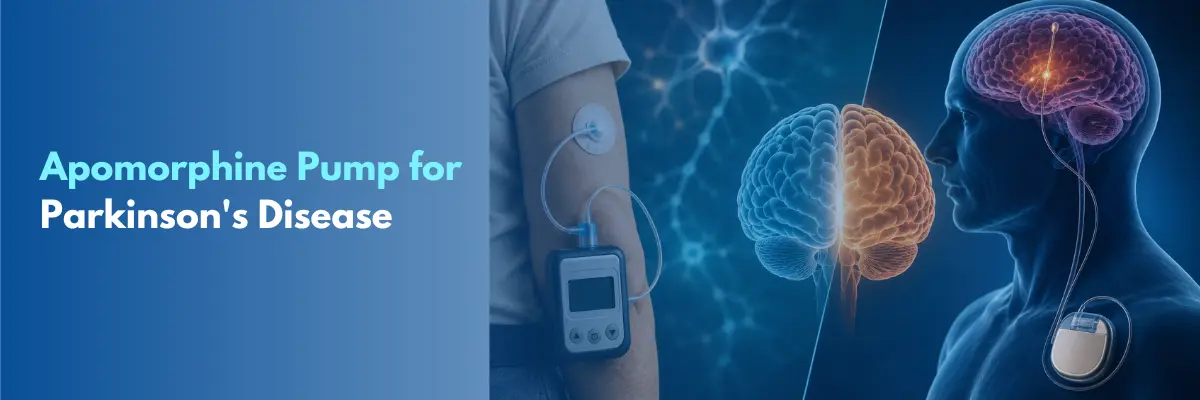
Why are patients choosing an Apomorphine Pump for Parkinson’s disease over DBS? Although Deep brain stimulation for Parkinson’s disease is an effective choice for purposes like advanced motor symptoms when levodopa stops working as a primary step. The treatment is not financially accessible to every patient.
Along with the DBS’s excruciating fee, it requires surgeons to perform invasive neurosurgery, such as digging holes directly into the skull to insert electrodes into the patient’s brain tissue. With extreme surgical risks like hardware failure, brain hemorrhage, or infection, patients often tend to go with a safer option.
Patients looking for alternatives to DBS for Parkinson’s usually go with an apomorphine pump, which is operated through an infused portable device that delivers a regular dopamine agonist through a needle situated under the skin. The pump serves as a substitute for oral medication, with no incision required, providing the patient with immediate relief without any physical risks.
How Apomorphine Pump for Parkinson’s Disease Work?
Since the apomorphine pump is a direct, non-surgical alternative to deep brain stimulation (DBS), it addresses the same issues as DBS, such as involuntary motor fluctuations and “off” periods. Symptoms like acute tremors, muscle stiffness, and trouble speaking or walking are some indicators of "off" times that can be addressed with the help of an Apomorphine pump for Parkinson's disease.
A thin, infused cannula is placed beneath the patient’s skin, typically in the upper arm, abdomen, or outer thigh. It is programmed to deliver a calibrated dose of apomorphine throughout the patient’s waking hours.
Once apomorphine is released into the patient’s bloodstream, it then travels to the brain after travelling through the blood-brain barrier. Over there, it manages to activate the dopamine receptors, which act in their natural role. The infusion helps patients receive immediate relief from “off“ times within the same 10- 20 minutes.
Apomorphine Pump Vs DBS: Which is Better?
The fundamental differentiation lies not solely in cost. But factors like potential risks, invasiveness, and reversibility matter when assessing apomorphine pump vs DBS. Since, DBS for Parkinson’s disease necessitates heavy brain modification. It carries irreversible neurological risks and demands battery replacements through critical surgeries on a regular basis.
On the contrary, going with an apomorphine pump for Parkinson's disease is entirely reversible. The treatment can voluntarily be paused come negatives effects or decides to conclude therapy at the patient’s demand without any hassle.
|
Factors |
Apomorphine Pump |
Deep Brain Stimulation |
|
Treatment Type |
Non-Surgical (Entails subcutaneous infusion) |
Acutely Surgical (Requires drilling and chest hardware replacement) |
|
Reversibility |
Reversible & can be paused anytime |
Demands surgery for extraction |
|
Eligibility |
Suitable for non-surgical or older patients with “Off Times” or motor fluctuations |
Involves psychiatric timeline, cognition, and clearance to perform regular programming. |
|
Recovery Period |
Not required. Immediate Setup |
Weeks or months in addition to follow-up appointments |
|
GI Tract |
Bypasses completely |
Face proper tissue stimulation |
|
Speech Complications |
No direct risks are present |
Critical threat to verbal volume and fluency |
|
Cost |
Low (with no-cost trial to $500/session) |
High ($35,000 - $100,000 and above) |
Considering Neurology & Neurosurgery abroad?
Share a few details and a Yapita Health medical advisor will get back to you with personalised guidance and a free, no-obligation cost estimate.
- Response within 24 hours · 100% confidential
- Vetted hospitals & board-certified doctors
- End-to-end travel & treatment support
Process to Perform Apomorphine Pump for Parkinson’s Disease
Patients with advanced Parkinson's disease can seamlessly begin their treatment with an apomorphine pump, an alternative to DBS with the assistance of a straightforward regimen. Without stressing about getting admitted to the hospital, complex surgical preparation, or a prolonged recovery period.
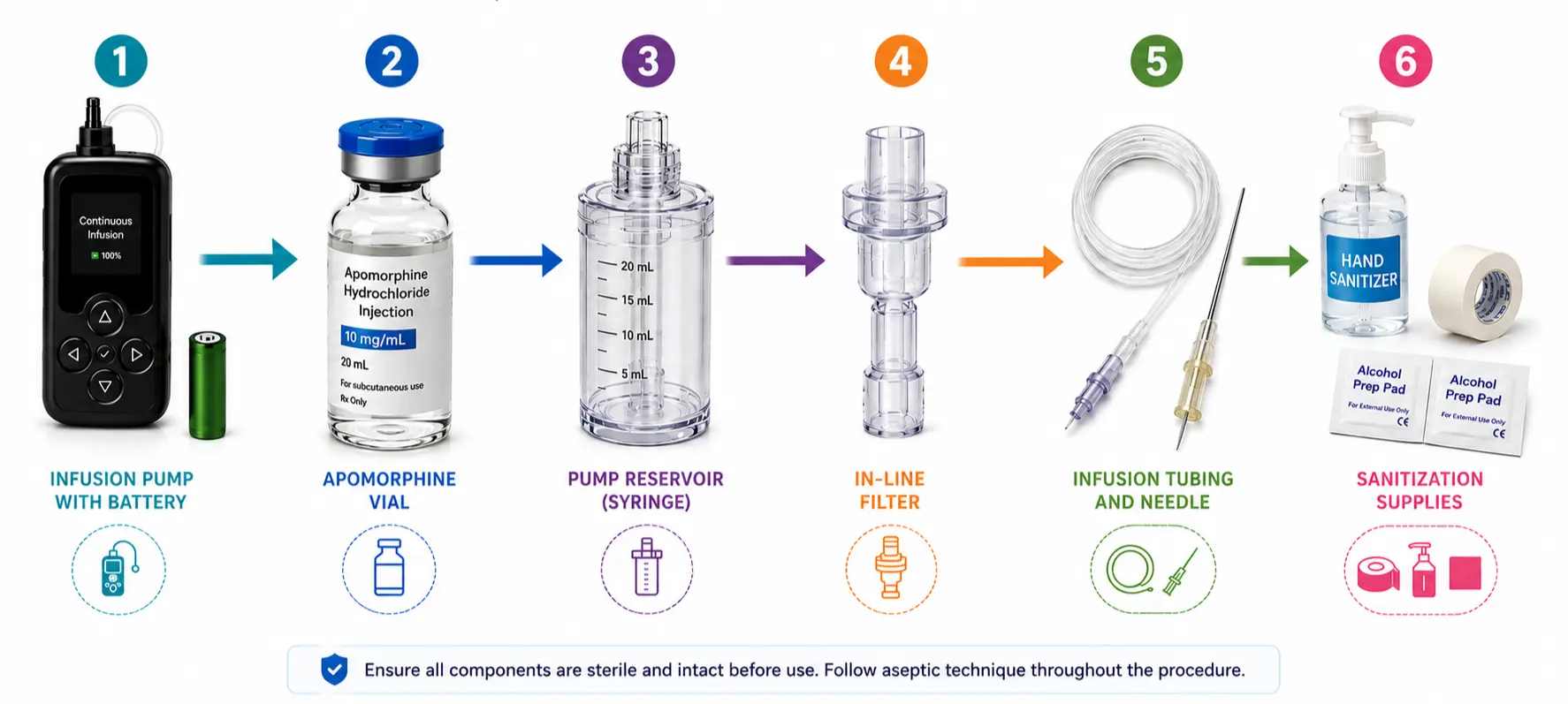
Tools Required to Perform Pump Therapy
-
Main Apomorphine Pump with a fresh and full battery.
-
Liquid apomorphine pre-filled in a sterile vial/cartridge.
-
A plastic reservoir designed accurately to the patient’s pump model.
-
Vial adapter or a connector to safely move the medication from the current cartridge to the reservoir.
-
A thin line tube along with a thin needle of around 29G - 31G Teflon/Steel.
-
Essentially, supplies such as surgical tape, hand sanitizer, and alcohol pads for skin prep for proper sanitation.
Implementation Process
I. Device Preparation
-
Properly clean and disinfect your hands. Take out the sterile reservoir and place it into the pump until it clicks.
-
Turn on the pump and let it run systematically to ensure its proper functionality.
II. Reservoir Filling
-
Open the cap of the apomorphine vial and sanitize the membrane with alcohol pads.
-
Attach the adapter with ease to the top of the vial.
-
Now, connect the pump to the adapter and manually plunge the electronic self-filling to shift apomorphine liquid to the reservoir.
-
It should be kept in mind that no air bubbles should enter the reservoir.
III. Perform Apomorphine Infusion
-
Now, screw the infusion set line onto the tip of the filled reservoir
-
Prime the line as shown on the pump’s screen and put a drop of liquid at the tip of the needle to make sure no gaps are left in the tube.
-
Make the mark in a fleshy area such as the outer thigh or lower stomach with a good amount of fat.
-
Ensure to always pick a spot an inch away from the old one for infusion.
-
Clean the selected area with alcohol pads and let it dry for a minimum of 30 seconds.
-
Next, place the 29G - 31G needle under the skin and push it straight at a 90-degree angle. Go with a 45-degree angle while using an angled cannula.
-
Afterwards, stick it with an adhesive strip softly against the skin to anchor it.
-
Secure it, followed by sticking the plastic tube next to the insertion with surgical tape to minimize the occurrence of accidental tugs.
-
Run the infusion procedure after loosening the plastic slides.
-
After the process is done, stop the infusion, firmly peel off the adhesive, and take out the needle from the area.
-
Finally, apply a bandage if required and swab the pump before using it again.
Conclusion
Deciding between an apomorphine pump vs DBS is all about balancing essential factors such as clinical safety and invasiveness, while keeping long-term healing in mind. While DBS offers a close-to-permanent solution for “off” in eligible patients. It increases the total population of patients seeking the treatment but cannot go forward due to age, medical ineligibility, or financial constraints.
This is where the apomorphine pump for Parkinson’s disease steps in. The pump therapy provides a non-surgical yet effective solution for advanced Parkinson’s disease treatment. It not only eases critical risks that are contingent during surgery but also immediately eliminates the abrupt “off” time and restores patients’ daily movements without any trouble in the way.
Contact Us
For patients who are in search of guidance or want to begin their treatment, Yapita Health offers effective consultations to assess and assist patients’ eligibility for Apomorphine Pump for Parkinson’s Disease. Contact Yapita Health to learn more about advanced Parkinson's disease, or to decide which is better according to their eligibility: Apomorphine Pump vs DBS.