
Cancer treatment in Germany is well-known for its advanced technology, personalized treatment plans and holistic care. Germany has well-equipped facilities for cancer treatment that use modern (and successful) techniques like molecular therapy, immunotherapy, precision radiation and targeted therapy like TACE, TACP. Germany is also home to world-class hospitals that offer complete and high-quality treatment for diverse cancers - despite the costs being significant.
The following sections explore how advanced and effective is cancer treatment in Germany for foreigners.
Why Germany for Cancer Treatment?
Germany is a top choice for foreigners seeking cancer treatment due to the high medical standards, strong cancer infrastructure and high survival and success rates. Let’s have a look:
-
World-class medical expertise: German medical standards are one of the most praiseworthy, especially when it comes to oncology. They have specialist training, multidisciplinary tumor boards and evidence-based protocols.
- Advanced technology and modern approach: Germany provides patients the advantage of innovative care such as immunotherapy which may not be widely available in their home country. Qualified medical professionals handle these technologies which makes it safe and more effective.
-
Strong cancer infrastructure: University hospitals and certified cancer centers with research partnerships with global institutions. German oncologists have 10 years of specialization with international training. Germany also has some of the most prominent cancer centers like Memorial Sloan Kettering and MD Anderson Cancer Center.
-
Survival and success rates: Germany offers survival rates that are above the EU average and global benchmarks. For example, breast cancer and early-stage prostate cancer survival rates in Germany is 83% to 89% (higher than other countries.) The treatment outcomes in Germany are 20% better than the global average even for advanced-stage cancer treatment.
-
Cost-quality balance: Germany offers cancer treatment at lower costs than the US/UK while maintaining high success rates and quality. The average cost of cancer treatment in Germany is around €25,000-€50,000 (find comprehensive cost discussion below.)
Advanced Cancer Treatment Techniques in Germany for Foreigners
People seeking cancer care find all types of cancer treatment here, from stem cell treatment for macular degeneration in Germany to colon cancer. Here are the methods that German doctors employ for cancer treatment:
1. Immunotherapy (targeted therapy)

An innovative approach that’s been around for a while, immunotherapy uses the patient’s immune cells to fight against the tumor. These methods allow the patients to access advanced treatment that supports their treatment plan and quality of life.
Immunotherapy is an example of targeted therappy which includes:
-
Oncolytic viruses that are human-safe and which bind to tumor receptors, triggering destruction of the malignant cells.
-
Photodynamic therapy or PDT which uses photosensitizing agents to selectively damage cancer cells while leaving the healthy cells that surrounds it.
-
ATACK or Allogeneic Targeted Activated Cancer Killer cells which are intentionally mismatched so that they directly destroy tumors resistant to other treatments.
-
Cancer vaccines (dendritic cell therapy) personalized for the patient which triggers the patient’s immune system to target and destroy cancer cells.
2. Dendritic Cell Therapy and Cancer Vaccines
Dendritic cell therapy uses patient’s immune cells to present tumor antigens and is used in solid tumors such as kidney, lungs, breast, pancrease, bowel and ovarian cancers. Even prostate cancer treatment in Germany is done with this technique for best results.
This therapy trains the immune cells to recognize the tumor-specific antigens. The cancer vaccines are personalized based on the genetic profiling of the patient’s tumor.
Dendritic cell therapy is often combined with hyperthermia or oncolytic viruses for better efficacy. This is a treatment option when traditional methods fail for the patient or they have recurrent/metastatic disease.
Stage 4 cancer treatment in Germany usually includes dendritic cell vaccines, car-T cell therapy, TACE (transarterial chemoembolization) and HIPEC.
It can cost around €20,000 to €38,000 and is accessible to international patients seeking safe and targeted cancer therapy in Germany.
3. Hyperthermia and HIPEC
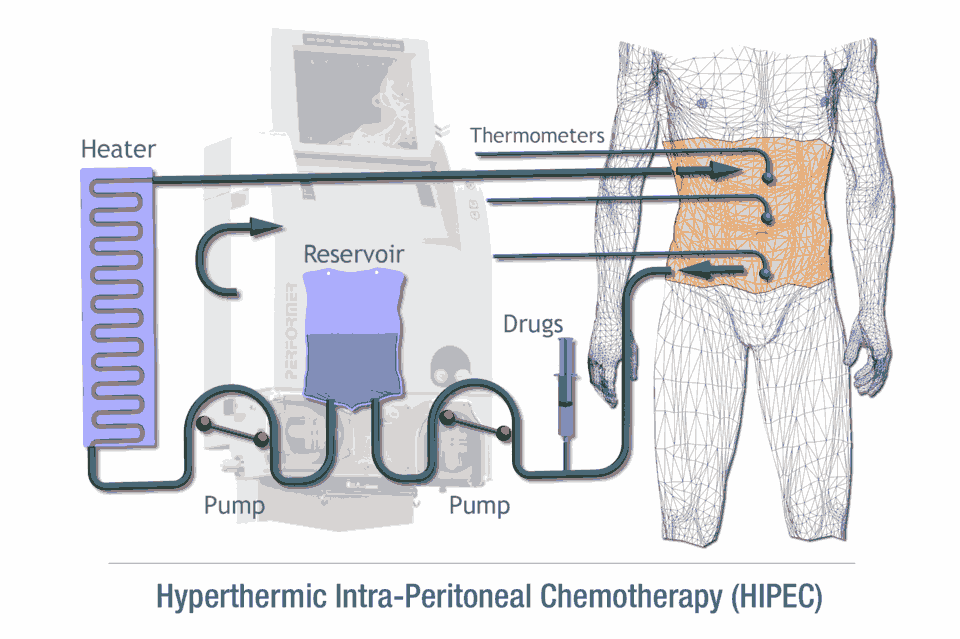
HIPEC for Cancer Therapy in Germany (Credit)
Evidence-based therapy that uses heat to destroy tumor cells and improve the efficacy of radiation and chemotherapy. Common methods for hyperthermic therapy include local, regional (HIPEC) and whole-body.
Facilities like the Grosshardern University Hospital and Hyperthermia Centre Hannover offer these techniques for improved results.
HIPEC (hyperthermic intraperitoneal chemotherapy) is effective in the treatment of bowel cancer where heat is combined with chemotherapeutic agents to destroy micrometastases.
4. Minimally invasive & robotic cancer surgery
Minimally invasive surgery and robotic surgery are effective in cancers at stages 1-3. For example, stage 2 lung cancer treatment in Germany includes video-assisted thoracic surgery without thoracotomoy. Similarly, bowel cancer is removed through the rectum.
Such surgical methods help save essential organs and includes fewer complications with quicker recovery.
5. Precision oncology and personalized treatment plans
Precision oncology uses precise treatment approach for attacking the tumor/cancer cells. Precision radiotherapy is a type of precision oncology which includes radiation therapy. Proton beam therapy is an example of precision radiotherapy for targetting the tumor directly without harming the surrounding tissues/organs. The proton beam therapy cost in Germany is around €1,21,829 to €1,22,400 with safety and procedure standards as that in the US/UK or nearby countries.
Precision oncology involves molecular profiling that matches patients with targeted drugs, immunotherapies and clinical trial-like programs. This also involves the use of tumor genetics, liquid biopsy and biomarkers. PSMA therapy for prostate cancer is also proven to be an effective option.
How Foreign Cancer Patients Benefit from Treatment in Germany
Foreign medical tourists looking for cancer treatment in Germany benefit in the following manner:
1. Access to advanced technology sooner: Low wait time
Germany offers lower wait times in comparison to the US or UK. Germany offers advanced cancer treatment methods like immunotherapies, targeted therapy, dendritic cell vaccines, HIPEC which may not yet be available or reimbursed in patient’s home country.
Oncology centers/hospitals in germany offer early access to advanced therapies within international guidelines.
2. High quality, safe and transparent care
Hospitals in Germany have high hospital accreditation standards with strict infection control protocols. They also have quality monitoring which keeps the facility at par with safety standards.
Dedicated multidisciplinary boards look into a patient’s case and arrive at the best treatment plan for the patient.
Foreign patients getting cancer treatment in Germany benefit from clear treatment protocols, documented outcomes and detailed cost estimates without excess charge.
3. Cost of cancer treatment in Germany
Cancer treatment cost in Germany is significantly cheaper than the US/UK private care for similar technologies and expertise. For example, stage 4 colon cancer treatment cost in Germany is around €25,000 to €40,000. And, PSMA-based therapy costs between €19,000 to €25,000, compared to €50,000+ in the US.
Common cancer treatment cost in Germany:
-
PSMA therapy in Germany (Lutetium-177) costs €19,000
-
Dendritic cell therapy at €24,000 (for full program)
-
TACE therapy at €8,000 - €9,000/session
-
Chemotherapy starting at €2,265 to €3,600+ depending on the treatment plan
- Full course radiation therapy costs around €15,000-€28,000
-
Laparoscopic resection starts around €11,593
Considering Oncology & Oncosurgery abroad?
Share a few details and a Yapita Health medical advisor will get back to you with personalised guidance and a free, no-obligation cost estimate.
- Response within 24 hours · 100% confidential
- Vetted hospitals & board-certified doctors
- End-to-end travel & treatment support
Success Rate of Cancer Treatment in Germany for Foreigners
The success rate of cancer treatment in Germany depends on the type, stage, and the patient’s health. The 5-year survival rate of a treatment is used as a determinant of the success rate.
The overall survival and outcomes are as follows:
|
Cancer type |
Success Rate (5-year survival) |
|---|---|
|
Breast cancer |
|
|
Prostate cancer |
>90% for localized type, 2-year survival rate is 60% for advanced prostate cancer |
|
Testicular cancer |
93.5% |
|
Lung cancer |
16.2% |
|
Liver cancer |
14.4% |
|
Hodgkins lymphoma |
84.5% |
|
Colorectal cancer |
>60% |
Note: Not every patient qualifies for advanced treatment like immunotherapy, consult an oncologist for the best way forward.
Steps for Foreign Patients Considering Cancer Treatment in Germany
-
Choose a cancer center with proper certifications, experienced doctors and teams in your specific cancer type. Our healthcare coordinators can help you find the best hospital for cancer treatment in Germany.
-
Prepare all the necessary medical documents like medical reports, imaging, pathology reports, treatment history and list of medications. Companies like Yapita Health can help you get medical visa, hospital invitation letter (important for medical visa for patients from certain countries.)
- Get your medical insurance details for smooth treatment process.
-
You can get remote second opinion from top oncologists in Germany. Paients can also get clarity on the treatment plan, success chances, cost estimate and travel planning. There is a significant importance of second opinion in cancer cases as it can mean better treatment plan and prognosis for the patient.
Cancer Treatment Success in Germany with Yapita
Germany is the go-to destination for advanced cancer treatment at lower costs and wait times than the UK/US. As evident from the sections above, Germany is a strong option for cancer treatment, combining advanced techniques, success rates ad robust support for international patients.
Yapita can help you choose Germany as a treatment destination for complex/advanced cancer cases, cases when traditional therapies have failed and when you do not have options back home.
Get in touch today to get second opinion with the top oncologists and precision oncologists in Germany.
