
If you or your loved one has been diagnosed with liver cancer, your first question might be what is the survival rate for liver cancer? While your doctor or self-researched statistics will give you a general outlook, they will not tell you the full story.
The following sections will explore the different aspects of stage 4 liver cancer survival rate and how you can understand it better. We will look at the key factors influencing liver cancer prognosis, how treatment can improve outcomes, and ways to improve your odds beyond standard treatment.
Considering Oncology & Oncosurgery abroad?
Share a few details and a Yapita Health medical advisor will get back to you with personalised guidance and a free, no-obligation cost estimate.
- Response within 24 hours · 100% confidential
- Vetted hospitals & board-certified doctors
- End-to-end travel & treatment support
Understanding Stage 4 Liver Cancer Survival Rate
The stage 4 liver cancer survival rate as per 2024 studies is between 18-24 months with treatment. And when left untreated, it is 6-12 months.
When you see a 5-year survival rate, it means the percentage of people still alive five years after the diagnosis. These numbers come with major limitations, such as:
-
The existing data you refer to is often old - it is 5+ years more outdated than the current treatment and factors applicable now.
-
Individual health factors are not taken into consideration, as these stats are based on patient groups.
-
These do not reflect recent breakthroughs. For example, immunotherapy or targeted therapy, which can make a difference in the survival rate, is not taken into consideration.
Current liver cancer survival statistics look something like this:
|
Stage at diagnosis |
5-year survival rate |
|---|---|
|
Stage 1 - Localized |
35% |
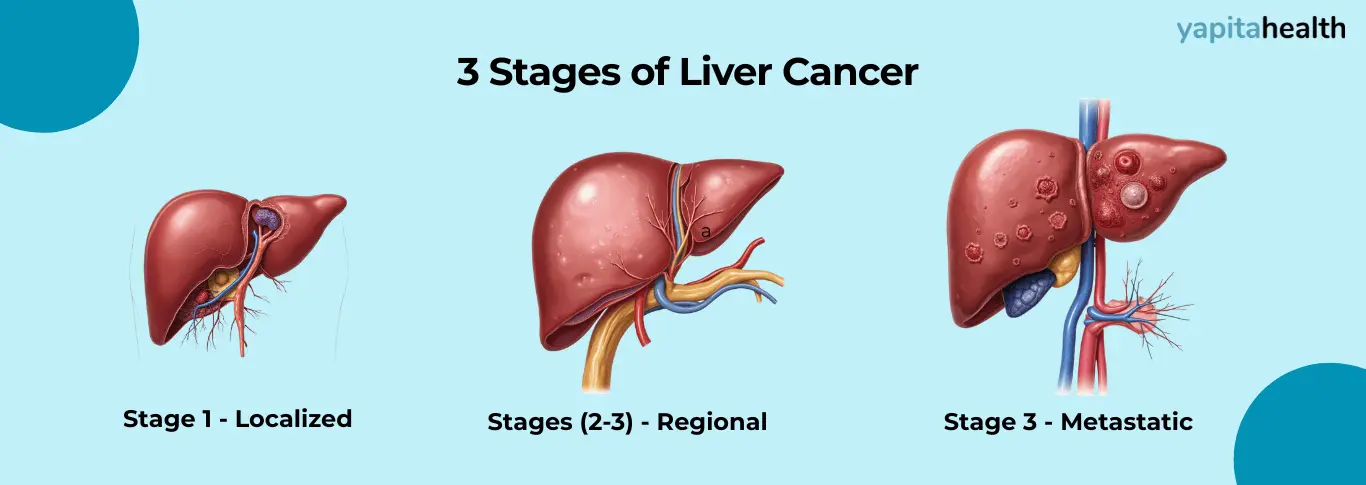
| Stages 2 to 3 - Regional | 12% |
| Stage 3 to 4 - Metastatic | 3% |
This data comes from SEER, and in its latest report, it has concluded that the death rates of cancer have decreased. For men, the death rates have come down to 1.7% per year, and for women, it is 1.3% annually.
Early detection can triple the odds of survival, but only 20% of the cases are caught at Stage 1. Stage 4 liver cancer survival rate is around 3-5%, which represents the 5-year survival rate.
Factors that Defy the Statistics
If these statistics scare you, it is important that you consider that these are not accurate for you - these are performed on a different set of individuals with only a single common point with you - the stage 4 cancer. Here's how your survival rate of stage 4 liver cancer can differ:
- Treatment type: Immunotherapy combination works best for patients in comparison to chemo-only treatment.
- Tumor biology: Fibrolamellar HCC or FGFR2 fusion + tumors respond better to treatment.
- Liver function: Child-Pugh A patients outlive Class C by years. This is a measure of liver damage, and Class A individuals have mild liver damage with normal functioning. Classes B and C have progressively poor liver health indicating higher liver damage.
What Affects Liver Cancer Survival?
The major factors that affect the cancer survival rates include the following factors:
-
Underlying liver health
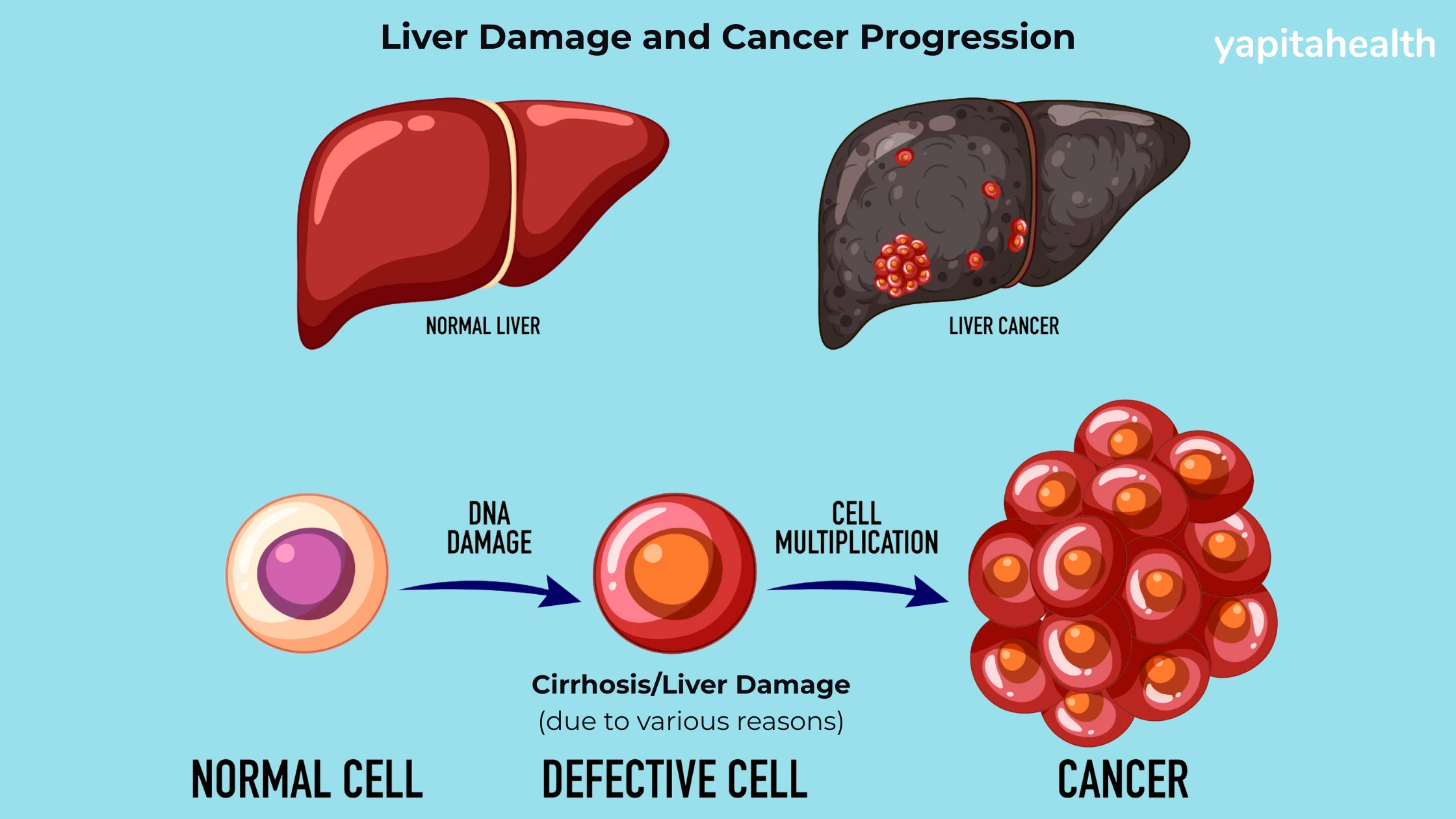
The underlying liver health for the patient can make a significant difference in the patient’s survival rate outcomes. For example, a patient with cirrhosis can face worse outcomes as there’s a risk of liver failure.
Similarly, a patient with viral hepatitis (B/C) can see an sped-up cancer progression if it is left untreated.
-
Characteristics of the tumor
The tumor characteristics play an important role in the survival rate or determining the prognosis. If the patient has a single tumor with a size less than 5 cm, they have a better prognosis than someone with multiple tumors.
Similarly, if someone has low AFP levels, their cancer will respond better to the treatment. AFP, or alpha-fetoprotein, is produced by the liver, and their levels go high typically during fetal development.
It should be very low in adults, and with treatment for liver disease or liver cancer, the levels should decrease with successful treatment.
-
Available treatment options
|
Treatment option |
Average survival extension |
|---|---|
|
Surgery |
If eligible, they can get an extension of 5+ years. |
|
Ablation |
2-3 years |
|
Immunotherapy |
6-12 months |
|
Combination therapies (Chemo and immunotherapy) |
Very high |
Breaking Down Survival by Stage
To have a better understanding of cancer survival rate, it is best to consider the cancer stage. Here’s a stage-wise look at survival:
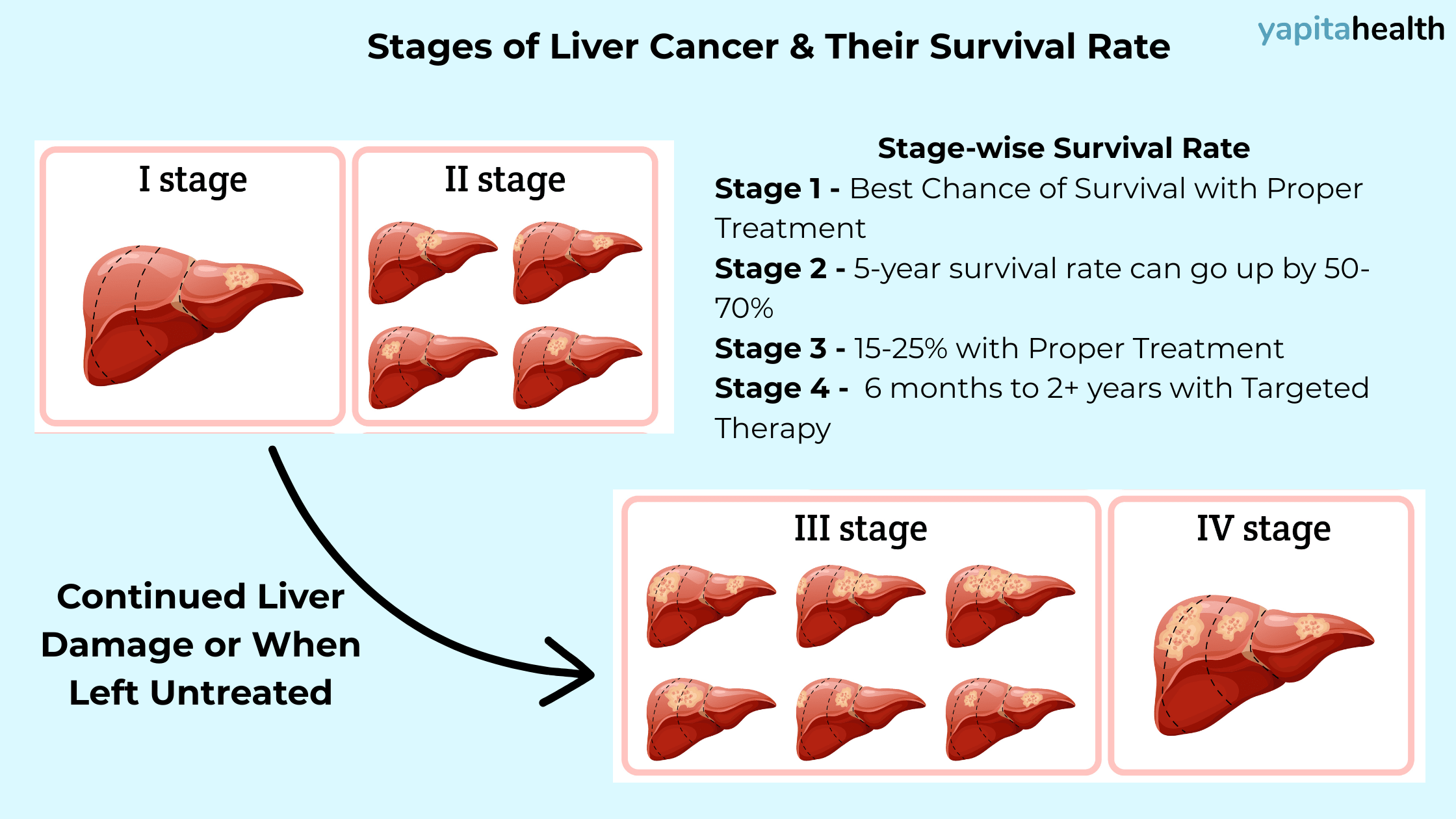
Early-Stage (1 and 2)
The early stage has the best shot at long-term survival. So, someone diagnosed with stage 1 or 2 of the cancer undergoing surgery such as a liver transplant or resection can see great outcomes.
Their 5-year survival rate can shoot up by 50-70% for transplant-eligible patients.
John (name changed to maintain privacy), aged 58, had a 3 cm tumor that was removed in 2020. They are now cancer-free with monitoring.
Mid-Stage (3)
This is the stage when the cancer has spread locally. TACE can shrink tumors and improve your prognosis by 15-25%.
It is also seen that combination therapies can improve the outcomes by 25%.
Late-Stage (4)
This is a tricky stage to come back from, but there have been cases where, with proper monitoring and the right treatment, there are better survival rates.
From 6 months to 2+ years, patients have seen an extension on their survival rate with targeted therapy.
How to Improve Survival Odds
Here’s how you can improve your survival odds and make your prognosis better:
Get a Second Opinion
Getting a second opinion is one of the best ways you can ensure you have the complete understanding of the treatment options that will be suitable for you. Nearly 20% of the treatment plans change once a specialist reviews the patient’s conditions.
Our network of certified doctors can provide second opinion that is helpful in pushing your treatment in the right direction.
Research Clinical Trials
Improving your odds of survival with the help of this approach can prove fruitful as you navigate this condition. Novel treatment options that are already showing great success rates include CAR-T cell therapy.
Other options are under consideration include the personalized vaccines.
Lifestyle Factors
This is one of the most common advice that your doctor would give you. You must be mindful about the lifestyle habits. It is also important that you follow these:
-
Avoid alcohol, especially if you have an underlying cirrhosis.
-
Control your diabetes, high blood sugar levels can fuel cancer growth.
-
Have a protein-rich diet, as it can combat muscle wasting.
Can liver cancer be cured?
Yes, if caught early on, then treatment options such as surgery or liver transplant can help cure the condition. Liver transplant is showing great results for people with liver cancer, a 2022 study shows nearly 10-year survival for people with cancer.
If you are looking for a long-term solution, contact us today to get the best quote for liver transplant from the best liver doctors in the world!
Late-stage cancer may require enhanced support and its management will be as chronic illness.
What is the most recent reliable and popular treatment?
In case of liver cancer there are a few fastest growing treatments that are showing good success rates. For example, CAR-T cell therapy and PD-1 inhibitors.
Can I rely on alternative medicine for liver cancer?
The alternative options for liver cancer can be considered as a way to ease the symptoms instead of curing cancer. Consult with your doctor for the best options that are suitable for you.
How often should I go for post-treatment scans?
Monitoring is an important part of long-term successful results. It is important that you go for follow-up scans and appointments every 3-6 months for the first two years. Your surgeon would dictate the exact timeframe.
You would need to undergo indefinite MRIs after treatment.
You are Not a Statistic
The research you conduct in a panicked state can push you deeper in a spiral. As mentioned before, the data is from a different group of individuals. With the right treatment and individual factors, there is a good chance you have a better survival rate.
Looking for a liver cancer specialist? Yapita Health has a rich network of oncologists and liver transplant specialists who can help!
Simply reach out to us using the form visible to you on the screen, and you’ll have an appointment within 24 hours!
