
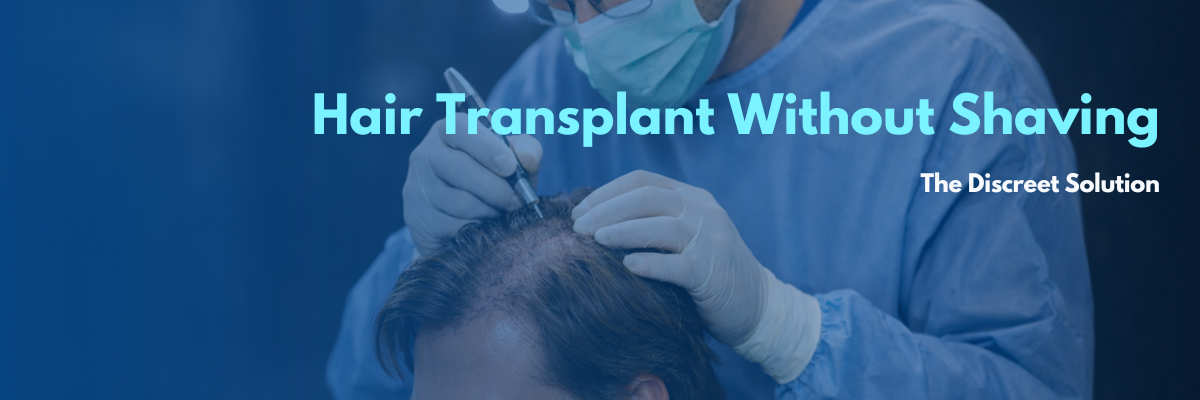
Unshaven hair transplant. The hair transplant industry is divided over this. Patients are inquiring about this alternative. Are you also looking for the answer to “is hair transplant without shaving possible?”
We’re here with the complete look at this highly-debated topic so you can make an informed choice. Read on to know all about this procedure, including what experts have to say about this method of hair transplant.
What is Unshaven Hair Transplant?
Hair transplant without shaving, also known as FUE without shaving is a popular method in which the recipient or donor areas. The existing hair masks the donor extraction or recipient sites and helps patient maintain privacy.
This is usually done by public figures or professionals who want to have minimal downtime while also ensuring their medical privacy is maintained. The procedure is time-taking and requires someone with exceptional skills, especially with the use of specialized tools.
Let’s explore all about the procedure, types, benefits and risks.
How It Works (Step-by-Step)
Step 1: Assessing the area
The consultation with your hair transplant surgeon begins with him analyzing your hair loss pattern, donor (area) density, medical history and expectations. This discussion includes deciding the new hairline design, number of required grafts and if a no-shave approach is suitable.
Step 2: Donor area preparation
Instead of shaving the entire back of the head, this step includes trimming small strips or patches of hair in the donor zone. These zones are hidden by the surrounding hair, so it is not easily visible even after surgery.
Step 3: Local anesthesia and graft extraction
This surgery involves local anesthesia which allows the surgeon to extract individual follicular units using a micro-punch tool. The surgeon ensures there is no over-harvesting and keeps the donor area density natural.
Step 4: Site creation and implantation
The surgeon proceeds to create slits in the recipient area as per the planned hairline and desired density. The extracted grafts are placed one by one which matches the direction and angle of the existing hair for natural-looking results.
Step 5: Post-proceudre care and discharge
The post-procedure care involves scalp cleansing and basic dressing, if required. You receive written instructions, medications and follow-up dates with most patients going home the same day.
The post-transplant care also includes showering carefully from the next day as per the surgeon’s instructions.
Considering Cosmetic & Plastic Surgery abroad?
Share a few details and a Yapita Health medical advisor will get back to you with personalised guidance and a free, no-obligation cost estimate.
- Response within 24 hours · 100% confidential
- Vetted hospitals & board-certified doctors
- End-to-end travel & treatment support
What do Experts Say About Unshaven Hair Transplant?
Yapita spoke to experts in the hair transplant industry for insights on this fairly new-to-the-limelight surgery and here’s what they had to say.
Dr. Emrah Cinik, one of the most renowned hair transplant surgeons in Turkey discourages patients from choosing this technique. He says “Despite the apparent discretion advantage that a no shave hair transplant might offer, the considerably higher risks and lower success rate lead us to strictly limit this option to very specific and carefully selected cases.”
As per Dr. Cinik, it is specifically discouraged for patients with significant hair loss, as it can lead to unsatisfactory density and compromised integrity. There still are specific patients for which this procedure is done - but for Dr. Cinik, this percentage is very low.
Other experts shared this view and explained that this procedure is mainly reserved for patients in the showbusiness, public officials, TV personalities who do not want their hair transplant to be noticeable.
Experts also say that even though this procedure seems like a better option that brings results without waiting months, it has its own challenges. The process itself becomes longer as the surgeon has to carefully extract the grafts without better visibility as compared to a traditional hair transplant.
Final verdict: You may choose the technique for hair transplant, but experienced surgeons will recommend traditional hair transplant unless there is an exceptional case.
Hair Transplant Without Shaving: Risks and Benefits
Now that you’ve heard the experts' opinions on this technique, let’s explore the risks and benefits:
Risks of Unshaven FUE
-
Higher risk to healthy follicles as the extraction tool damages the surrounding follicles, which can compromise the natural hair.
-
Unshaven FUE makes it difficult to clean the grafted area, remove crusts and apply essential care for graft survival. This may lead to complications in post-operative care process.
-
Increases shock loss as temporary hair loss after the procedure can affect the surrounding healthy hair. This reduces the aesthetic advantage people seek with unshaven hair transplant.
-
The existing long hair can dislodge the implanted grafts through entangling. This interrupts them from becoming fully secured.
Benefits of Unshaven hair transplant
-
There isn’t a lot that changes in appearance with unshaven hair transplant as the front and top hair are not shaved. Most people around you won’t even notice it.
-
You return faster to social and professional commitments as the traditional “buzz cut” phase does not exist.
-
There is a better comfort for patients who are performers, public-facing professionals as they don’t have to explain their process to anyone.
-
Similar to the results that are there in traditional hair transplant. The graft survival rate, hair growth and final density are similar to regular hair transplant techniques like FUE.
-
Allows you to visualize the results within a few days as the implanted follicles blend right in with the existing hair. There is no real-time preview of the final outcome.
-
Most women opt for this as there is no need of shaving.
FUE Without Shaving: Before & After to Expect
Most patients start seeing results within 3rd or 4th month of the procedure. The results continue to improve up to 12-18 months after the procedure. Here’s a look at the before and after process:
Before:
-
Before the procedure, you may have been noticing hair loss in some areas.
-
Rapidly increasing hair loss despite trying control methods.
After 12-18 months:
-
Implanted hair is permanent as it is taken from a genetically stronger donor area.
-
Soft and natural hairline even when combed back due to proper design.
-
Density depends on the donor quality and the number of grafts that were safely harvested.
Recovery Timeline
Despite being relatively shorter for unshaven FUE, it is still a surgical process that requires recovery:
|
Recovery Timeline |
Progress |
|---|---|
|
0-2 days |
Soreness, tightness, slight swelling around the forehead. Tiny scabs can be present around the grafts. |
|
3-7 days |
Scabs begin to fall off with gentle washing and most patients resume office work within this time |
|
2-8 weeks |
Some transplanted hair sheds, normal and part of the cycle |
|
3-6 months |
New hair starts to grow and they may appear thin and soft. |
|
6-12 months |
Gradual thickening and better density. You can cut and style your hair normally. |
Final Verdict
If you are considering an no-shave hair transplant and want to know about the cost and whether you are good candidate, the best way forward is an expert consultation. Our panel of hair transplant experts can help you make the right decision, without travelling a lot.
A no-shave hair transplant is more than just avoiding the razor and Yapita understands that. Let our patient experts help you find the right surgeons and clinic for a safe and effective process.