
Liver transplant is considered the only cure for liver cirrhosis with active research looking for more options. India is currently the leader in liver transplants with advanced technology and skilled surgeons performing the surgery.
Liver cirrhosis is one of the most common issues plaguing Africans with nearly 50% of the patients being admitted with end-stage disease. Cirrhosis affects young adults between 20-40 years mainly due to exposure to Hepatitis B. Males are more affected than female indivdiuals.
The following section looks into the liver cirrhosis treatment cost in India for people with liver cirrhosis.
What is Liver Cirrhosis?
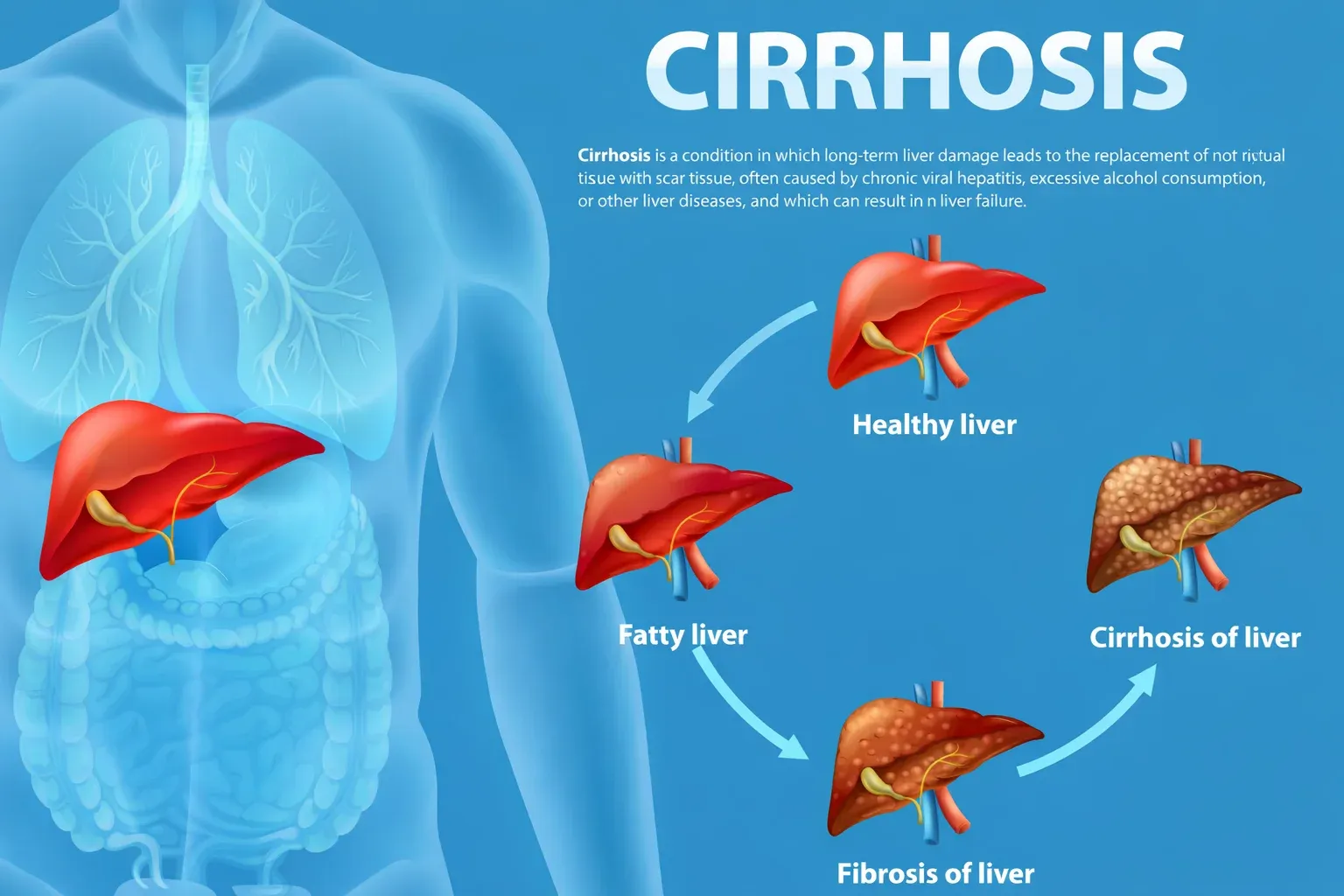
The Stages of Liver Cirrhosis
Important Note: Early detection and treatment can slow progression through these stages. Regular monitoring, lifestyle changes, and appropriate medical care are crucial for managing liver cirrhosis effectively.
Liver is a powerhouse cleaner of the body cleaning out toxins and removing harmful substances from the body. With time and causes like alcohol abuse, Hepatitis infection and non-alcoholic fatty liver, the organ starts feeling burdened, unable to fully carry out its function. When the burden becomes too much for the organ, it starts showing signs of liver damage which when ignored for long can turn into liver cirrhosis.
Many inherited diseases can also lead to liver cirrhosis such as Alpha 1 Antitrypsin deficiency, cystic fibrosis, Wilson’s disease and glycogen storage disease.

Common symptoms of cirrhosis include:
- Upper abdominal pain
-
Loss of appetite
-
Easy bruising
-
Jaundice
-
Dark urine
-
Itching
-
Weakness
-
Fatigue
-
Impaired sleep
-
Gastrointestinal bleeding
-
Poor memory
-
Decreased muscle mass and weakness
The diagnosis of this condition is through blood tests where elevated liver enzymes (like 5'-Nucleotidase), and liver biopsy (when cirrhosis is unclear) help the medical team diagnose cirrhosis of the liver. Other tests include physical examination, history evaluation and routine testing while some other tests may also be recommended in case of chronic cirrhosis (stages 3-4 when heart and kidney problems may exist.)
Types of Liver Cirrhosis Treatment
There are mainly two treatment options for liver cirrhosis:
- Medical management & lifestyle changes
- Liver transplant
Liver cirrhosis treatment mainly includes alcohol cessation, antiviral medication in case of Hepatitis-related liver cirrhosis or weight management for metabolic dysfunction-associated steatotic liver disease (MASLD).
Liver transplant is the only proper cure that effectively treats cirrhosis of the liver. To control the symptoms you can also be prescribed medications like diuretics that can help prevent edema from occuring again. The following section lists the complete treatment options with their respective costs.
Liver Cirrhosis Treatment Cost in India
|
Liver cirrhosis treatment type |
Cost (USD) |
|---|---|
|
Monthly medication management |
$4,000-$10,000+ |
|
Complication management |
$150-$1,650+ |
|
Advanced treatment (TIPS, etc.) |
$3,000-$6,000+ (private hospital costs go up to $8,000) |
|
Liver transplant for liver cirrhosis |
$25,000-$35,000 (+additional costs) |
The average chronic liver cirrhosis treatment cost in India lies between $25,000-$35,000 (when liver transplant is recommended). On average, early-stage liver cirrhosis treatment cost in India lies between $1000-$1,500+ per month and includes medications that help manage the symptoms.
The typical cost components in liver cirrhosis treatment is:
-
Initial consultation
-
Routine medicines and regular follow-ups
-
Management of complications (bleeding, fluid in the abdomen, infections and confusion)
-
Hospitalization costs (ICU or ward)
-
Interventional/endoscopic procedures (TIPS, ERCP, variceal banding)
-
Liver transplant and lifelong follow-up in advanced liver cirrhosis
1. Initial consultation cost
Your Yapita Health coordinators can help setup a consultation with expert hepatologists at your chosen city and hospital. BLK-Max Super Specialty Hospital in Delhi is one of the best hospital for liver cirrhosis in India.
The consultation includes diagnostic workup where your doctor will require blood tests like:
-
LFT, CBC, INR,
-
Kidney function,
-
Viral markers and
-
Autoimmune profile (some cases).
This also includes imaging like ultrasound of the abdomen, FibroScan, Doppler, CT/MRI and upper GI endoscopy in some cases.
Cost:
-
At mid-range private hospitals: around ₹7,000-₹20,000 ($100-$250)
-
At multispecialty hospitals: around ₹15,000-₹40,000 ($200-$450).
2. Monthly medication management cost

Once the diagnosis has been confirmed by the treating doctor in India, they will assess the liver cirrhosis stage and recommend medical management (early to mid-stage liver damage) that continues for months-years.
The medications can include:
-
Prednisone for reducing inflammation,
-
Antiviral drugs for chronic hepatitis B or C,
-
Managing fluid retention using diuretics,
-
Controlling blood pressure using beta-blockers such as propanolol or carvedilol,
-
Lactulose or rifaximin for hepatic encephalopathy,
-
Proton pump inhibitors, hepatoprotective medications,
-
Bile flow improving drugs like Ursodiol,
-
Nutritional supplements like Vitamin K or other supplements could be useful in addressing deficiency,
-
Liver scarring and NASH-related fibrosis can be managed with newer medications like Resmetirom (Rezdiffra).
Early-stage cost: Primarily OPD visits, medicines, periodic test costs: ₹4,000-₹6,000 ($50-$70) per month for brand-alternatives.
Branded drugs & frequent lab tests at private hospitals: ₹5,000-₹10,000+ ($100-$200) per month.
Decompensated cirrhosis medication cost: ₹6,000-₹15,000+ ($70-$200+) per month.
3. Cost of managing complications
As cirrhosis worsens with time, there are more complications that add significantly to the overall cost of treating the condition.
-
Ascites and fluid overload require large-volume paracentesis with/without albumin infusion, day care or short admission. It also include diuretic adjustment and evaluation. Ascites management in India costs between ₹10,000-₹45,000+ ($150-$500) (depending on albumin use and stay.)
-
Variceal bleeding is a medical emergency and requires emergency admission, blood transfusion, endoscopy with band ligation or sclerotherapy. Variceal bleeding management costs between ₹40,000-₹1,00,000+ ($450-$1,200) in case of prolonged ICU and multiple transfusions.
-
Hepatic encephalopathy management is with medications (rifaximin, antibiotics and lactulose) with close monitoring and ICU care in rare cases if the patient is unstable. Hepatic encephalopathy management in India costs between ₹50,000-₹1,50,000 ($550-$1,650.)
-
Infections or kidney involvement is managed by IV antibiotics, albumin, fluids, nephrology support in India. If there is kidney failure, the patient is put on dialysis. Treating infections and kidney-related complications in India costs between ₹65,000-₹1,50,000+ ($750-$1,650+.) The costs go up when dialysis and ICU admission are involved.
4. Advanced treatment for liver cirrhosis cost
In case of recurrent bleeding, high blood pressure in the liver veins or refractory ascites, doctors advise advanced treatment like Transjugular Intrahepatic Portosystemic Shunt or TIPS.
Only specialized centres have this option and the TIPS cost in India ranges between ₹2,50,000-₹5,00,000+ ($3,000-$6,000) depending on the stent type, hospital stay and chosen city.
Liver transplant is also an advanced option that is applicable in advanced liver cirrhosis and the cost ranges between $25,000-$35,000. Additional costs (immunosuppressants, post-op care, pre-op tests/evaluation) can range between $2,300-$7,300. India is one of the best countries for liver transplant with skilled hepatologists, transplant surgeons and safe facilities that offer this life-saving treatment at affordable price without compromising on the quality.
Health insurance and financial assistance can provide some relief to patients from economically weak background. Ayushman Bharat (Indian government scheme) covers partial/full cirrhosis costs. NGOs and charity funds can also help such patients bear the treatment costs, especially in case transplant.
Key factors Influencing Liver Cirrhosis Treatment Cost in India
-
Stage of the liver cirrhosis where compensated cirrhosis is cheaper to manage than decompensated cirrhosis with ascites, bleeding or encephalopathy.
-
Type of hospital (government or private) can affect the overall treatment cost.
-
Chosen city/region can influence the cost, for example Delhi NCR, Mumbai, Bangalore charge as listed above while tier-2 cities are cheaper.
-
Inpatient/outpatient care cost
-
Type of treatment (medication, transplant, advanced treatment techniques.)
-
Requirement of advanced procedures (TIPS, banding, liver transplant increase costs significantly)
-
Applicable insurance and schemes can help reduce the cost burden.
Considering Hepatology abroad?
Share a few details and a Yapita Health medical advisor will get back to you with personalised guidance and a free, no-obligation cost estimate.
- Response within 24 hours · 100% confidential
- Vetted hospitals & board-certified doctors
- End-to-end travel & treatment support
How Yapita Helps You Get Liver Cirrhosis Treatment in India
Yapita Health has a strong network of hospitals and hepatologists that helps you reduce the wait times, access high-quality treatment and get best results. We bring you closer to the best liver cirrhosis treatment options through complete visa assistance, hospital & doctor selection, medical coordination, language support and travel planning.
With us, you get:
-
Quicker, safer and affordable liver cirrhosis treatment options with our team standing by you every step of the way so you can focus on recovery.
-
Vast network of liver cirrhosis treatment hospitals and doctors so you get access to world-class liver transplant care.
-
Committment to excellence which allows us to help you get a stress-free treatment.
Final Thoughts
Liver cirrhosis is one of the most pressing health issues in countries like Africa where it is ignored until the last minute. Getting early diagnosis can help avoid complications and progression to liver cancer.
Get in touch today to access the best hepatologists and hospitals waiting to help you live a better life.