
5,000+
Successful treatments placed
Real patients, real outcomes across hair, dental, cosmetic and IVF programs in 13+ countries since launch.
+4,995 happy travellers
Affordable Gastric Sleeve Surgery in Turkey with Expert Bariatric Care
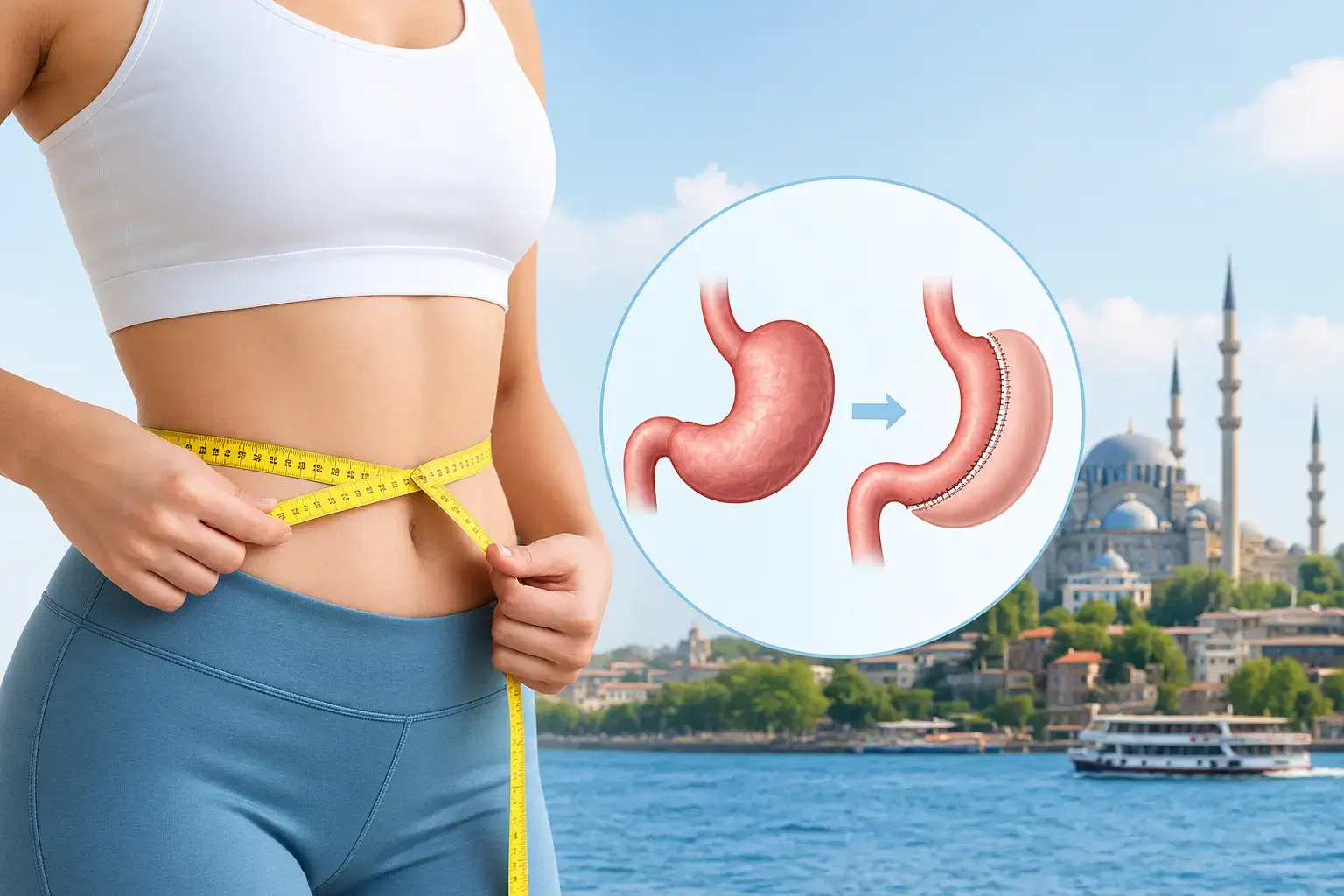
Gastric sleeve surgery in Turkey is a permanent process involving reshaping of the stomach to help patients with severe obesity achieve their expected weight loss along with metabolic improvement.
The procedure removes around 70% - 80% of the patient’s stomach, leaving them with a banana-shaped tube with an approximate capacity of 100- 150 ml. Also known as sleeve gastrectomy in Turkey, patients often choose this type of surgery, making it the most performed weight-loss surgery in Turkey.
Share a few details and receive a personalized quote from our medical coordinators within 24 hours no obligation.
The gastric sleeve cost in Turkey differs based on the type of surgeon, hospitals/clinics, medical evaluation, technique to be implemented, and the total duration of stay and aftercare services.
The cost in Turkey typically ranges from $2,000 to $8,000 for the entire treatment and approximately $2,500 to $3,500 for all-inclusive packages. This is why patients prefer to have it overseas in countries like Turkey, saving up to 60%-80% of the aggregate cost established in countries like the US, UK, and Europe.
|
Country |
Cost (USD) |
|---|---|
|
Turkey |
$2,500 - $5,500 |
|
USA |
$14,000 - $25,000 |
|
UK |
$10,000 - $18,000 |
|
Europe |
$5,400 - $19, 500 |
Am I eligible for gastric sleeve? The patient is assessed on the basis of many factors before getting clearance for gastric surgery, such as health conditions related to obesity, BMI, overall health, and so on.
The gastric sleeve Turkey BMI requirements follow the international IFSO/ASMBS guidelines as the basis for evaluation.
BMI must be greater than or equal to 35 for patients, regardless of any health conditions.
BMI must be between the range of 30 and 34.9 for patients with metabolic diseases such as high BP, type 2 diabetes, or acute sleep apnea.
Age must be between 18 and 65 regardless of gender.
Documented reports of unsuccessful attempts at previous weight loss methods, both surgical and non-surgical.
Medical clearance to go under general anesthesia.
Long-term commitment to follow a strict diet and regular follow-ups.
|
Criteria |
Gastric Sleeve |
Gastric Bypass |
Gastric Balloon |
|---|---|---|---|
|
Purpose |
Eliminates 80% of the stomach |
Forms a tiny pouch and reroutes the small intestine |
Silicone balloon positioned in the stomach |
|
Type |
Hormonal + restrictive |
Malabsorptive + restrictive |
Non-surgical, for temporary results |
|
Surgery duration |
45 - 90 mins |
60-140 mins |
30-45 min |
|
Post-surgery stay |
2-3 nights |
2 - 4 nights |
1 day |
|
Reversible |
No |
Yes (Complicated process) |
Yes (removed typically after 6-12 months) |
|
Weight loss % |
24-30% |
30-35% |
15-20% |
|
BMI |
35+ |
35+ |
27-40 |
|
Preferrable for |
Lasting weight loss, one-step |
Type 2 diabetes or severe reflux |
Ineligible patients or unwilling to go for surgery |
Brief consultation covering the patient’s height, medical history, weight, and past and current medications.
Tests like ECG, blood work, chest X-ray, endoscopy, and abdominal ultrasound to be taken for clearance.
Signed consent forms along with confirmed eligibility to undergo general anesthesia.
Preoperative diet prescribed by surgeons for at least 1-2 weeks before the surgery
No kinds of food to be consumed for 8 hours, and water for around 4 to 6 hours.
Administration of general anesthesia
Performance of laparoscopic resection with surgical staplers, supported over the stitched layer with a staple line to minimize leaks and bleeding.
Thorough check of the patient’s treated area before removing the instruments.
The duration of the surgery is 45 - 90 minutes
Patients are then shifted to the recovery room.
Patients are to walk within 4-6 hours post-surgery to minimize clot risks.
Recovery stay for 2-3 nights to keep in check of vital signs, pain management, intravenous fluids, blood checks, and anti-nausea medications.
Leak testing or fluoroscopy to be performed in the initial days before taking clear liquids.
Verified clinics, transparent pricing, end-to-end concierge the proof, measured.
5,000+
Successful treatments placed
Real patients, real outcomes across hair, dental, cosmetic and IVF programs in 13+ countries since launch.
1,000+
Expert doctors
Board-certified specialists committed to quality care
20+
Countries covered
From Istanbul to São Paulo, on six continents.
98%
Patient satisfaction
Verified post-treatment reviews & follow ups.
400+
Partner hospitals
JCI and ISO-accredited facilities only.
100%
Verified clinics
On-site audits before any clinic ships traffic.
24/7
Patient support
Concierge in your language, every step of the way.
In most cases, the gastric sleeve turkey recovery time is short, with patients flying back home after 4-7 days post-surgery after getting clearance from the doctor.
|
Recovery period |
Prescribed Diet |
|---|---|
|
Days 01-07 |
Approved or clear liquids |
|
Weeks 2-4 |
Blended food, mostly pureed |
|
Weeks 4-6 |
Soft foods that are easy to chew |
|
After 6 weeks |
Firm introduction to regular food |
|
Following time |
Proper protein intake, portion control, balanced nutrition with hydration. |
Candidates going through gastric sleeve surgery in Turkey often experience excess body weight loss over a duration of 18 to 24 months.
Month 1: Between 10% - 15% of excess body weight loss due to a strict liquid diet.
Month 3: 23% - 35% noticeable excess body weight loss, visible through enhanced energy and physical changes.
Month 6: Loss of excess body weight of up to 45% - 55% with metabolic improvement.
Month 12: Reaches primary weight loss milestone by losing 60% - 70% of body weight.
Month 18 - Month 24: Peak weight stabilization consisting of 70% - 80% excess body weight loss.
Staple line leak into the abdominal cavity.
Postoperative bleeding along abdominal trocar sites.
Formation of scar tissue narrowing the gastric tube, resulting in constant nausea, managed by endoscopic balloon dilation.
Increased acid reflux due to stomach pressure.
Elevated cholesterol due to rapid weight loss, managed by preventive medications prescribed for at least 6 months.
Sensitivity to specific food categories during ongoing liquid diet.
Why go with Yapita Health for gastric sleeve surgery in Turkey? Because it assists patients in connecting with experienced bariatric specialists along with suitable clinics or hospitals based on your medical requirements, budget, and treatment expectations.
Contact us to discuss your treatment options, eligibility, travel arrangements, and approximate gastric sleeve cost in Turkey.
Share a few details and a Yapita Health coordinator will send you a vetted clinic shortlist and personalized quote within 24 hours.
Transparent pricing, no hidden fees. Every package includes the clinic stay, surgeon fee and aftercare.
Common questions about Gastric Sleeve Surgery in Turkey, answered by our care team.
Compared to other countries, the gastric sleeve price in Turkey is 60%- 80% lower, depending on the clinic and hospital, surgeons, and the generic cost of the weight loss surgery goes around $2,500 - $5,500 USD.
Yes, with the assistance of experienced bariatric surgeons and accredited facilities, candidates can have a safe surgery.
The gastric sleeve BMI requirements in Turkey state that a standard BMI needs to be 35 or above, and 30-34.9 for patients with conditions associated with obesity, like high blood pressure or type 2 diabetes.
Your age needs to be between 18 and 65, with a BMI of 35 or above, be eligible for undergoing anesthesia, and have tried weight loss methods prior.
It is advised to stay for another 7-9 days post-surgery: 4-5 nights in the hospital and the remaining days for healing follow-ups before flying back.
No. The effect of the treatment cannot be reversed, as part of your stomach is permanently removed.
The type of treatment entirely depends on the patient’s expected goals and requirements. However, gastric sleeve is a simpler surgery with very few nutritional risks. Gastric bypass, on the other hand, is suitable for patients with type 2 diabetes or severe reflux.