
.png)
Proton Beam Therapy is one of the most advanced forms of radiation therapy in modern oncology. India has its first publicly available proton therapy facility at Tata Memorial Centre’s ACTREC campus in Kharghar, Navi Mumbai.
This revolutionary treatment has become more accessible to Indian and international patients seeking precision-based cancer care. The National Hadron Beam Therapy Facility at TMC uses high-energy protons to target cancer cells with high accuracy.
This minimizes damage to the surrounding healthy tissues, which makes this therapy beneficial for tumors in sensitive areas like pediatric and rare cancers.
The following sections will help you understand all about this therapy and how you can get the treatment at TMC.
What is Proton Beam Therapy?
Proton beam therapy uses positively charged particles or protons instead of traditional X-rays to destroy cancer cells. The therapy has advantages over other therapies due to the Bragg Peak effect where the protons deposit the maximum energy directly inside the cancerous mass.
This spares healthy organs from being exposed to radiation which is missing in other radiation-based therapies. This is what makes proton therapy effective for different cancer types near vital organs like spinal cord, eyes, heart or brainstem.
Why Choose Proton Beam Therapy at Tata Memorial Hospital?
The Tata Memorial Proton Therapy Centre at ACTREC is the first government-funded proton therapy facility in South Asia. Here’s all that it entails:
-
The center features three treatment rooms with 360-degree rotational gantries (metal frames that house radiation sources)
-
It delivers intensity Modulated Proton Therapy or IMPT using the Pencil Beam Scanning technique.
-
Every treatment room is well-equipped, with robotic parts for maximum precision and anesthesia delivery setups for pediatric patients.
-
Around 15-20% of the radiotherapy patients and over 2000 children could benefit from proton therapy in India.
- TMC offers specialist groups that help decide on treatment plan. These Disease Management Groups comprise of clinicians, experts trained in specific diseases. This includes proton therapy centre where they have a group of specialy trained physicists and technologists working at specialized DMGs.
- TMC also actively takes part in active scientific research that defines the role of proton therapy for various disease types as a focus area along with technological evaluation and development.
So far, TMC has been able to treat 32% of bone tumors cases, 29% of CNS tumors and 14% of Head and neck tumors using proton beam therapy.
Take a look at the official video by TMC for Proton Beam Therapy:
Cost of Proton Therapy at Tata Memorial Hospital
The proton center at TMC was built as a national project to bring down costs significantly compared to private facilities. Patients can get proton beam therapy at Tata Memorial Hospital within Rs. 10 lakhs, whereas the cost of proton beam therapy in India at private facilities charge double or triple.
40% of the patients pay one-third of the typical private-sector cost depending on their income category. This is what makes TMC proton therapy one of the most affordable advanced radiation options globally.
Who benefits from proton beam therapy?
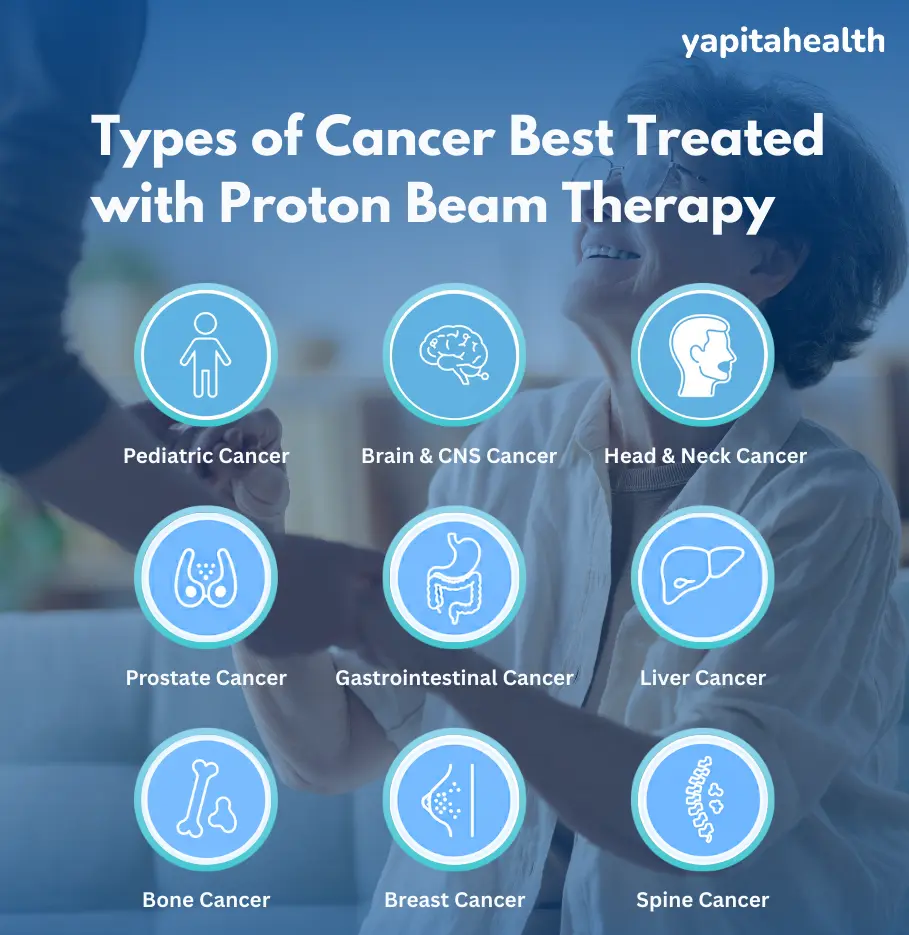
According to oncologists at TMC proton therapy is ideal for cancers where precision radiation is important to avoid collateral damage. The key cases include:
-
Pediatric cancers.
-
Brain and CNS tumors.
-
Head and neck malignancies.
-
Bone and soft-tissue sarcomas.
-
Prostate cancer.
-
Gastrointestinal and liver cancers.
-
Gynecological, spine and breast tumors.
Each patient’s case is assessed by a panel of oncologists to confirm the eligibility for proton therapy. Proton beam therapy for lung cancer has also been proven to be effective in controlling the cancer's growth.
How Proton Therapy Works at TMC
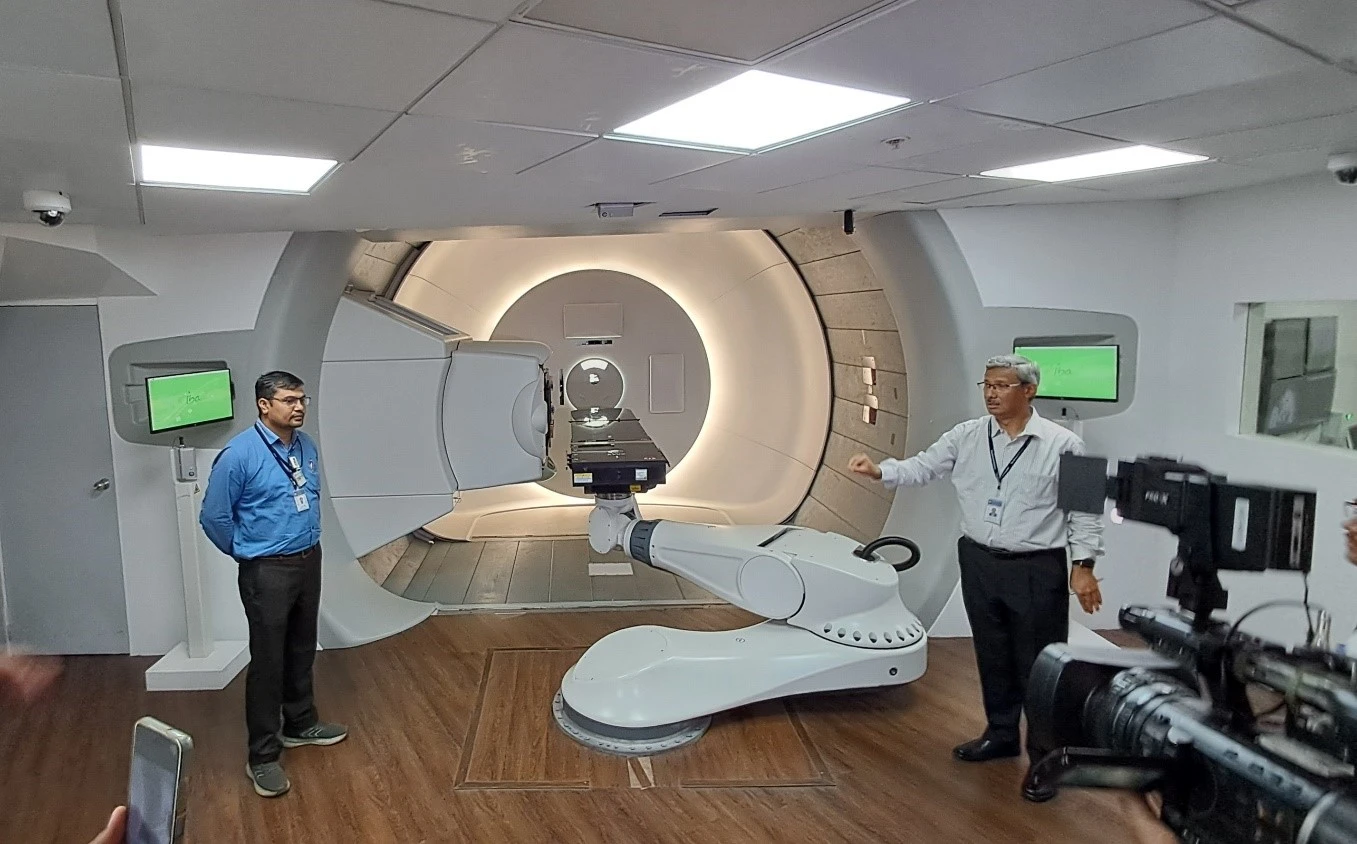 Proton Beam Therapy Treatment Room at TMC (Credit)
-
Consultation & evaluation: A radiation oncologist determines if proton therapy offers clear benefits over conventional radiotherapy.
-
Planning MRI/CT: Detailed scans can help understand the tumor boundaries and nearby structures.
-
Dose calculation & simulation: Precise planning using 3D treatment mapping.
-
Follow-up: Patients are monitored for side effects and long-term outcomes.
The PBS used at TMC ensures sub-millimeter accuracy which is ideal for pediatric and complex spinal or cranial tumors.
Succes & Research at Tata Memorial Proton Centre
As per recent studies, 38% of the patients treated at TMC proton facility were for brain or CNS tumors, with 23% being treated for bone cancers.
19% of the patients got treated for head and neck tumors.
In addition, 27% of the patients were treated free of cost through Patient Welfare Funds.
Advantages of Proton Therapy in TMC
-
Higher precision, minimizing radiation exposure to healthy tissues
-
Better long-term quality of life due to organ preservation.
-
Government-subsidized access to low-income patients
-
Integration with research makes it a hub for advanced cancer therapy.
Comparing Proton Therapy at TMC vs Private Hospitals
|
Feature |
Tata Memorial Hospital (ACTREC) |
Private Centres (e.g., Apollo Chennai) |
|---|---|---|
|
Type |
Public Sector (Government-funded) |
Private Corporate |
|
Technology |
IMPT with PBS & Robotic Gantry |
IMPT, PBS |
|
Cost Range |
Free to Rs 10 lakh |
Rs 20–30 lakh |
|
Pediatric Care |
Integrated anesthesia & child imaging |
Available but costlier |
|
Subvention |
Yes (CSR, PM Fund, Welfare) |
Limited |
|
Research Focus |
Yes (Radiobiology & Trials) |
Moderate |
How to access proton beam therapy a TMC?
You can get access to this advanced therapy through our dedicated patient coordinators at Yapita Health. If you are an international patient, our team can help you get a medical visa, appointments and the best package from Tata Memorial Hospital.
Considering Oncology & Oncosurgery abroad?
Share a few details and a Yapita Health medical advisor will get back to you with personalised guidance and a free, no-obligation cost estimate.
- Response within 24 hours · 100% confidential
- Vetted hospitals & board-certified doctors
- End-to-end travel & treatment support
PBT at Tata Memorial Hospital
Tata Memorial hospital’s proton beam therapy centre represents a major milestone in India’s fight against cancer. It bridges the affordability gap, delivers cutting-edge technology and ensures equitable access for patients across all income levels.
For families seeking the most accurate and advanced radiation treatment PBT is life-changing. Get in touch today to get your personalized treatment plan for PBT at TMC with Yapita!
