
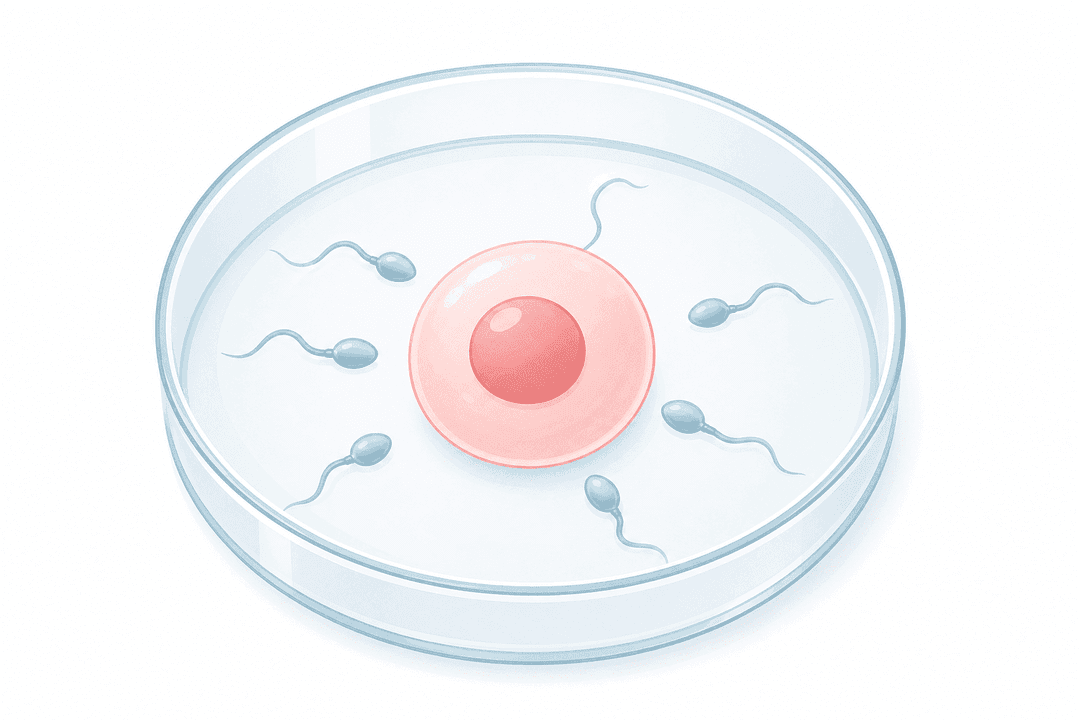
IVF
Start your journey to parenthood.
Estimated Cost
$3,500
Includes medications & monitoring.
Duration
2–3 Weeks / Cycle
Success Rate
60–70%
Trusted IVF in Kampala, from Uganda's first IVF clinic to the new public fertility centre at Mulago.

IVF in Uganda is offered by private fertility clinics in Kampala and by the government's Mulago Specialised Women and Neonatal Hospital. The Ministry of Health estimates that 10–15% of Ugandan couples cannot have children, and up to 75% of these cases are linked to past infections that damage the fallopian tubes. IVF is recommended for:
Blocked or damaged fallopian tubes
Low sperm count or poor sperm movement (ICSI)
Ovulation problems and PCOS
Endometriosis
Unexplained infertility
Women under about 40 have the best chance with their own eggs
A healthy uterus, with fibroids treated first if needed
Infection screening for both partners
Ready for injections, scans and possibly more than one cycle
Support from a partner or family during treatment
Select the number of IVF cycles for an instant fertility treatment cost estimate.
Pioneering clinic: Women's Hospital International and Fertility Centre in Bukoto delivered Uganda's first IVF baby.
A public option: Mulago Specialised Women and Neonatal Hospital offers IVF at lower prices than private clinics.
Care close to home: English-speaking specialists and no travel costs for Ugandan couples.
Ask each clinic for its pregnancy and live birth rates for your age.
Check how many embryos the clinic usually transfers; transferring fewer lowers the risk of twins and triplets.
Ask for a full written quote, including drugs and embryo freezing.
Women's Hospital International & Fertility Centre, Bukoto, Kampala
UMC Victoria Hospital (IVF and Fertility Unit), Kampala
Mulago Specialised Women and Neonatal Hospital, Kampala (public)
Neogenesis Fertility Centre, Kampala
Dr. Edward Tamale Ssali – fertility specialist and founder, Women's Hospital International & Fertility Centre
Dr. Joseph Kafuuma – fertility specialist, Women's Hospital International & Fertility Centre
Dr. Sachin Kulkarni – consultant, IVF and Fertility Unit, UMC Victoria Hospital
Conventional IVF: eggs and sperm combined in the lab.
ICSI: one sperm injected into each egg.
Donor sperm and donor egg IVF: offered by some private clinics.
Frozen embryo transfer: using spare embryos from an earlier cycle.
Verified clinics, transparent pricing, end-to-end concierge the proof, measured.
5,000+
Successful treatments placed
Real patients, real outcomes across hair, dental, cosmetic and IVF programs in 13+ countries since launch.
1,000+
Expert doctors
Board-certified specialists committed to quality care
20+
Countries covered
From Istanbul to São Paulo, on six continents.
98%
Patient satisfaction
Verified post-treatment reviews & follow ups.
400+
Partner hospitals
JCI and ISO-accredited facilities only.
100%
Verified clinics
On-site audits before any clinic ships traffic.
24/7
Patient support
Concierge in your language, every step of the way.
Tests: hormone tests, ultrasound, HSG and semen analysis.
Stimulation: 8–12 days of injections with scans.
Egg collection: under sedation.
Fertilisation: IVF or ICSI, then 3–5 days of embryo culture.
Embryo transfer: pregnancy test about 2 weeks later.
IVF in Uganda costs about UGX 14–18 million ($3,800–$4,900) per cycle at private clinics, and some charge up to UGX 30 million ($8,100). The public Mulago women's hospital has charged about UGX 13 million ($3,500). Plan extra for:
Fertility drugs and tests
ICSI and embryo freezing
Repeat cycles
IVF is generally not covered by health insurance in Uganda.
Follow your injection schedule closely.
Avoid smoking and alcohol.
Rest for a day after egg collection.
Seek counselling support if you need it.
For Ugandan couples, IVF in Kampala avoids travel and keeps follow-up simple, and Mulago offers a lower-cost public route. Couples who want more clinic choice or donor programmes often compare Nairobi or India. Book a free consultation.
Share a few details and a Yapita Health coordinator will send you a vetted clinic shortlist and personalized quote within 24 hours.
Transparent pricing, no hidden fees. Every package includes the clinic stay, surgeon fee and aftercare.
Common questions about IVF (In Vitro Fertilization) in Uganda, answered by our care team.
About UGX 14–18 million per cycle at private clinics, and about UGX 13 million at Mulago.
Women's Hospital International, UMC Victoria Hospital, Neogenesis and Mulago Specialised Women and Neonatal Hospital in Kampala.
Yes, the public women's hospital offers IVF at lower prices than most private clinics.
It depends mainly on the woman's age; no guaranteed result exists, and some couples need more than one cycle.
Generally no.
About 4–6 weeks from injections to the pregnancy test.
Expert guides and insights about IVF (In Vitro Fertilization) in Uganda to help you decide with confidence.

Planning IVF treatment abroad involves more than choosing a fertility clinic or comparing costs. International patients must consider treatment timelines, medical evaluations, travel arrangements, visa requirements, legal regulations, and post-treatment care. This blog explores the benefits of fertility medical tourism and outlines the essential steps to prepare for IVF overseas. It covers medical records, medication documentation, travel checklists, country-specific regulations, accommodation, and follow-up care after returning home. Patients can also learn how Yapita Health supports their journey by coordinating with hospitals and fertility specialists, providing cost estimates, and assisting with travel formalities for a more organized treatment experience.

As per a report in 2024, the estimated rate of infertility was 15%. Like any other prevalence, this statistic takes into account factors such as growing trend of male infertility, hormonal disorders (severe in urban areas) and lack of access to treatments. If you and your partner are someone struggling due to the above factors, I have good news for you - India can bring assisted reproductive technologies to you, breaking down the financial barrier back home.

Navigating IVF can feel overwhelming, but you're not alone. Whether you're in New York or London, Berlin or Los Angeles, this guide breaks down everything you need to know - from choosing a clinic to managing costs - in a clear, supportive way.

In vitro fertilization (IVF) is one of the most widely used fertility treatments, helping millions of couples and individuals conceive when natural methods are unsuccessful. Whether due to medical conditions, age-related infertility, or other factors, IVF offers hope - but it also comes with complexities, emotional challenges, and financial considerations. The following sections cover everything you need to know about IVF, from how it works and what to expect to success rates, costs, and alternatives.

Are you considering IVF or freezing your eggs/sperms? Chances are your doctors have already given you the complete rundown for how it is all going to go. But it is natural to think which one will give you a higher chance of success? Will it be frozen or fresh embryos? Both methods are highly successful, but it depends on crucial factors such as age and lifestyle factors. The following sections will help you understand your IVF options with frozen vs. fresh embryos clearly. Helping you make an informed decision by the end of the blog.
Understand the factors affecting IVF success and failure. Learn how to increase success rates with a healthy lifestyle and expert guidance. Consult our IVF specialist for personalized treatment options.